Lisez cet article en français.
Download the original Latin version of the Acta Sanctorum article along with French and English translations.
For more than fifteen centuries, Saint Véran has held an important place in Vence’s religious history. Remembered as one of the city’s early bishops and honored as a patron saint, he remains a familiar figure in local tradition. Yet, despite his enduring reputation, surprisingly little can be said with complete certainty about his life. Much of what we know comes from accounts written centuries after his death, often drawing on earlier traditions whose origins are difficult to establish. Separating historical fact from religious legend is therefore no simple task.
According to tradition, Véran lived during the fifth century, was the son of Saint Eucherius, Bishop of Lyon, and the brother of Saint Salonius, who became Bishop of Geneva. He is also said to have spent time at the famous monastery of Lérins, where he studied under Saint Hilary, before eventually becoming Bishop of Vence. It is a fascinating story, but one that raises almost as many questions as it answers. The principal difficulty is that another Saint Véran, associated with Lyon, appears in the historical record with many of the same biographical details. Were these two different men whose stories became confused over time, or was there originally just one Véran whose life was subsequently claimed by different religious communities? Historians have wrestled with this question for centuries, and the answer is far from straightforward.
The surviving evidence is a complex mix of early Christian writings, papal correspondence, ecclesiastical records, medieval traditions, and later historians’ work. Some sources appear to support one interpretation, while others point in a different direction. Even scholars who devoted considerable effort to investigating Véran’s life often disagreed on the most basic details. Fortunately, their disagreements have left us a valuable record of the evidence they examined and the conclusions they reached. Among the most important of these investigations is an extensive study published in 1750 in the Acta Sanctorum, a remarkable scholarly undertaking whose authors were determined to examine the lives of the saints with a critical eye.
You can read a more in-depth account of Saint Véran in this article: Faith and Legends: Uncovering the 5th-Century Mystique of Saint Véran of Vence.
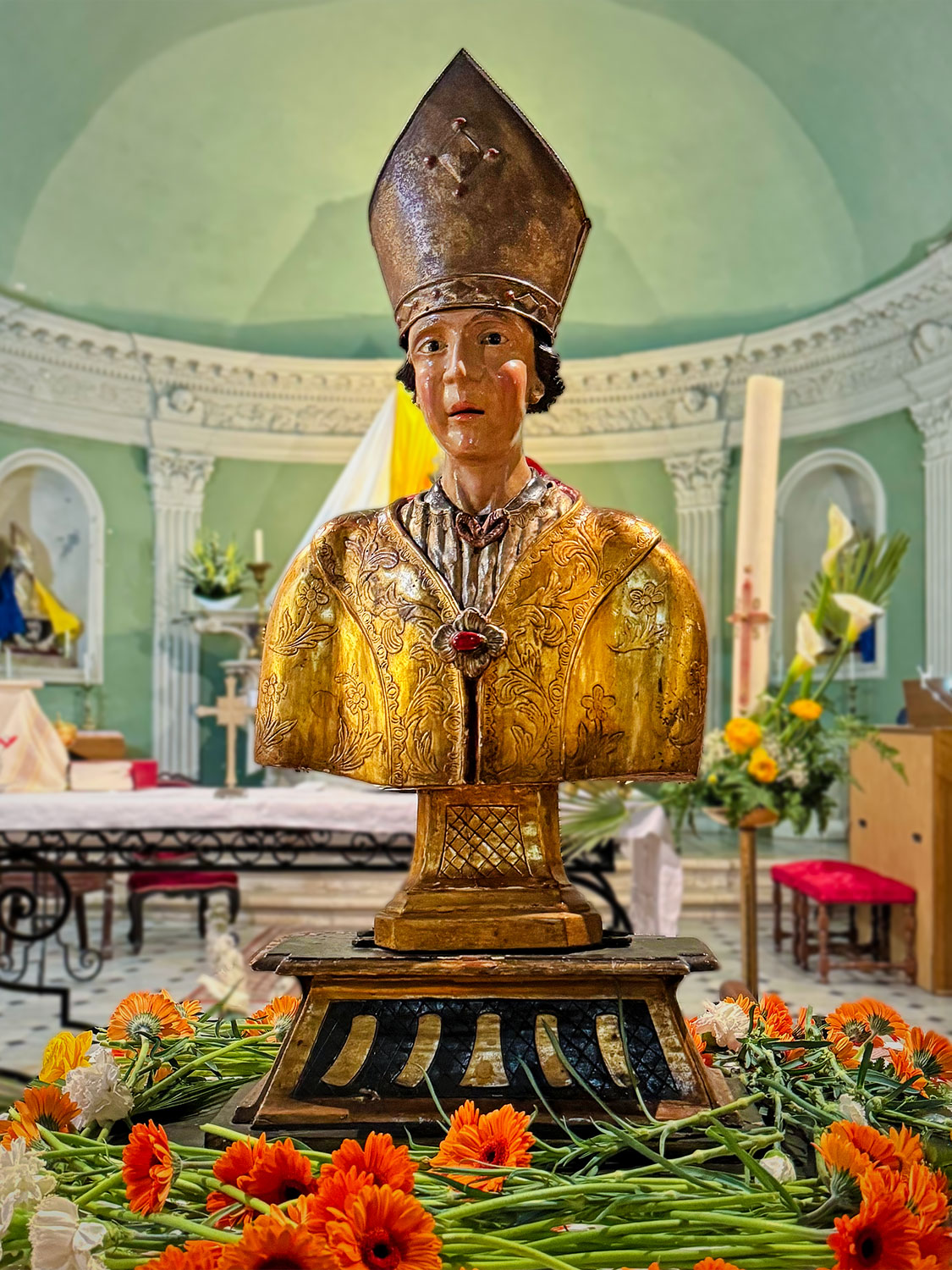
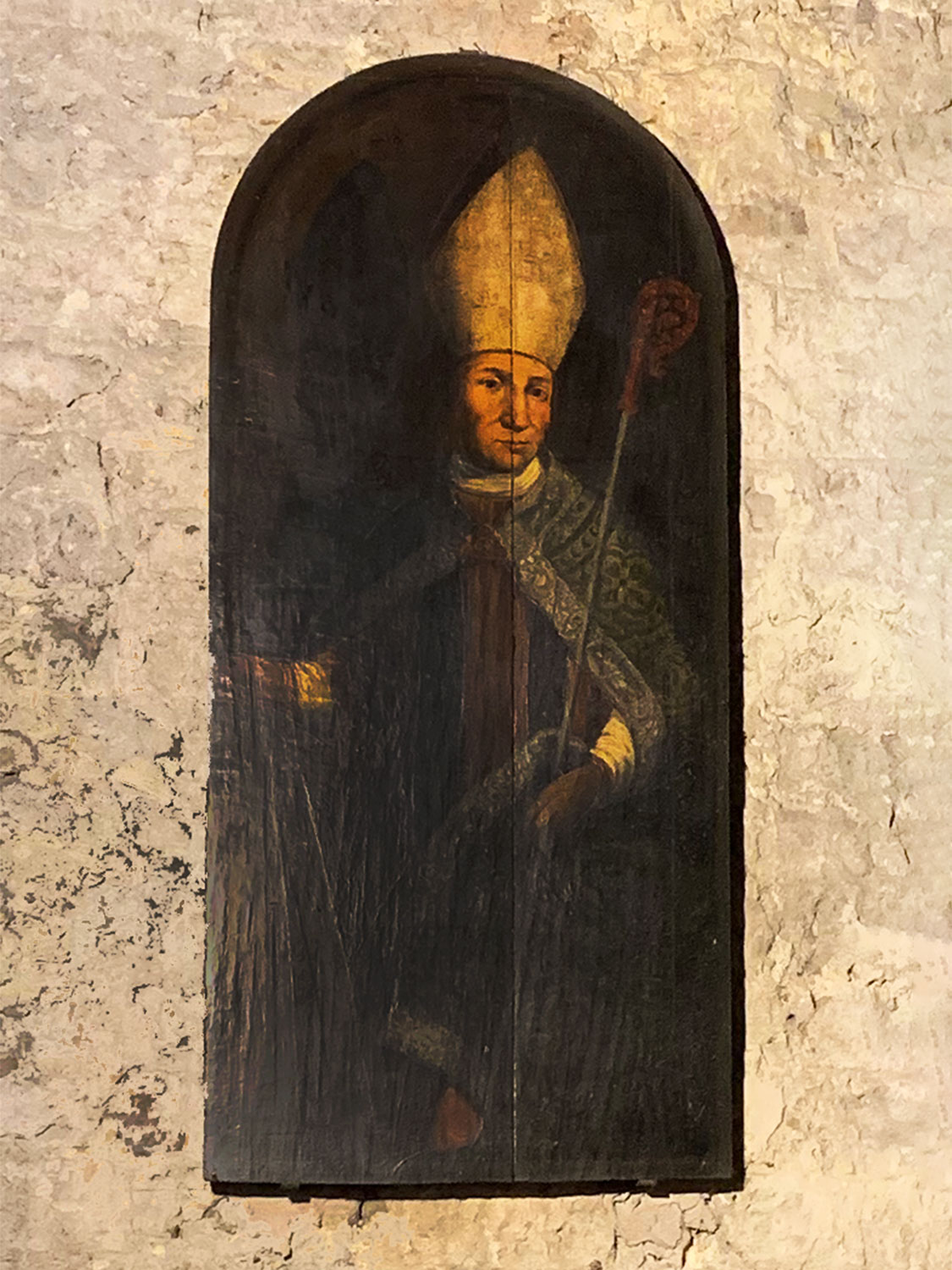
The Bollandists and the Acta Sanctorum
In the seventeenth century, a group of Jesuit scholars began an extraordinarily ambitious project: to collect, examine, and publish the lives of Christian saints across the centuries. The idea began with the Belgian Jesuit Heribert Rosweyde (1569–1629), but his successor, Jean Bolland (1596–1665), transformed it into what became known as the Acta Sanctorum, or Acts of the Saints. Working with fellow Jesuit scholars, particularly Godfrey Henschen and later Daniel van Papenbroeck, Bolland set out to produce something far more substantial than another collection of religious biographies. The first two volumes, covering saints commemorated in January, appeared in Antwerp in 1643. What began as an ambitious scholarly project eventually grew into a monumental collection of 67 large volumes containing more than 60,000 pages, published over nearly three centuries. The scholars responsible became known as the Bollandists, a name still associated with the critical study of the lives of saints.
What distinguished the Bollandists from many earlier writers was their determination to examine the historical evidence rather than simply repeat traditional accounts. They searched monastic libraries, collected ancient manuscripts, compared different versions of the same stories, and investigated everything from dates and geographical locations to family relationships and ecclesiastical appointments. Their work was organized according to the calendar of saints’ feast days, with individual entries often accompanied by extensive commentaries discussing the reliability of the available sources. When accounts contradicted one another, the Bollandists tried to explain the discrepancies. They also questioned longstanding traditions, even when doing so brought them into conflict with religious authorities. Their methods were not always as rigorous as modern historians’, and they sometimes drew mistaken conclusions. Still, their willingness to subject religious traditions to serious historical scrutiny was remarkable for its time.
The result was something much more valuable than a collection of saints’ biographies. The Acta Sanctorum became an extraordinary archive of early Christian and medieval history, preserving countless documents, traditions, and scholarly observations that might otherwise have been lost or forgotten. The Bollandists did not always succeed in separating fact from legend, but they often identified the very problems that still occupy historians today. Their work also survives as an ongoing scholarly tradition, maintained by the Société des Bollandistes in Brussels. For anyone investigating a figure as elusive as Saint Véran of Vence, the collection provides an invaluable starting point. Among its thousands of pages is a particularly interesting 1750 examination of his life, in which the Jesuit scholar Jean Périer attempted to untangle the conflicting accounts surrounding the early bishop of Vence.
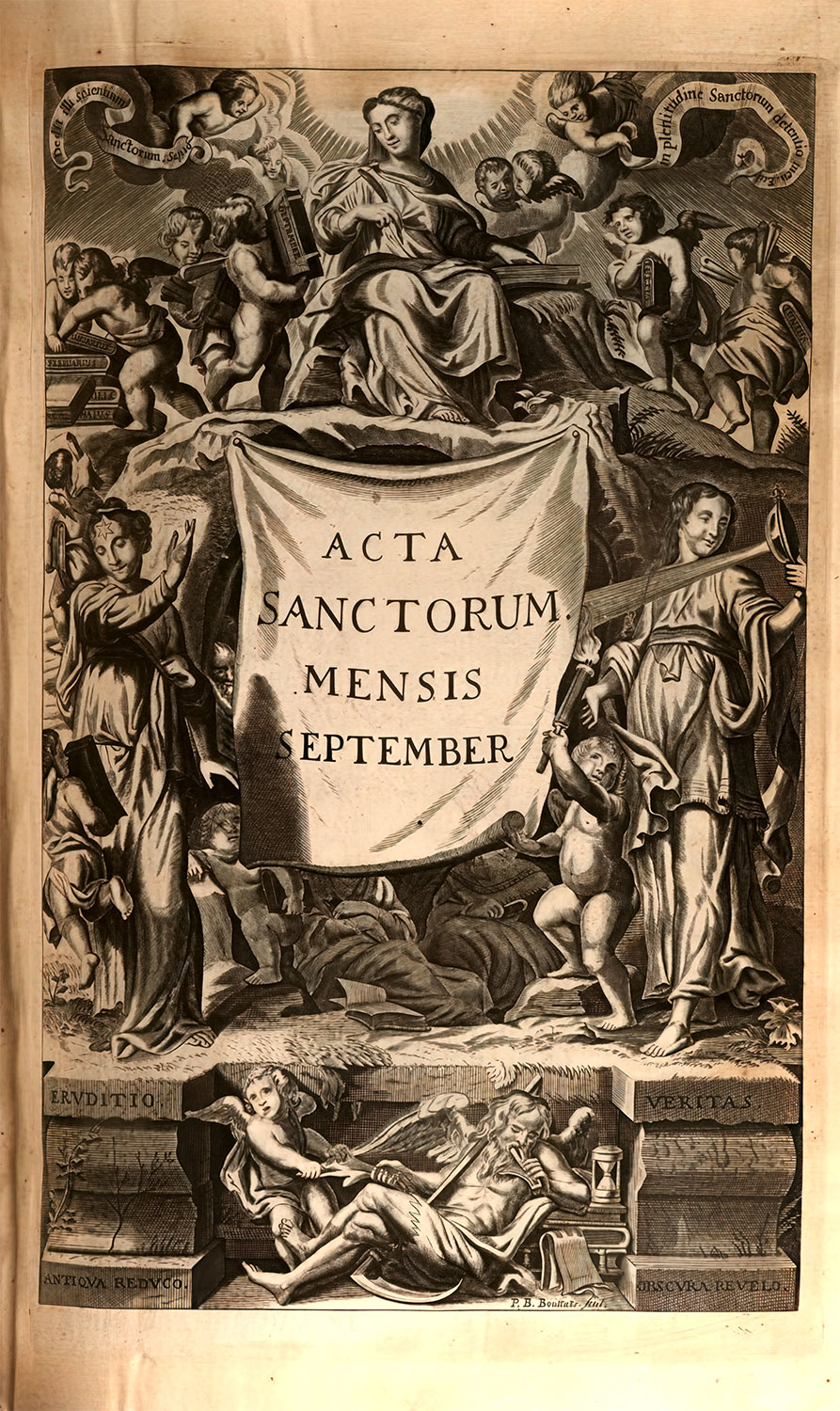
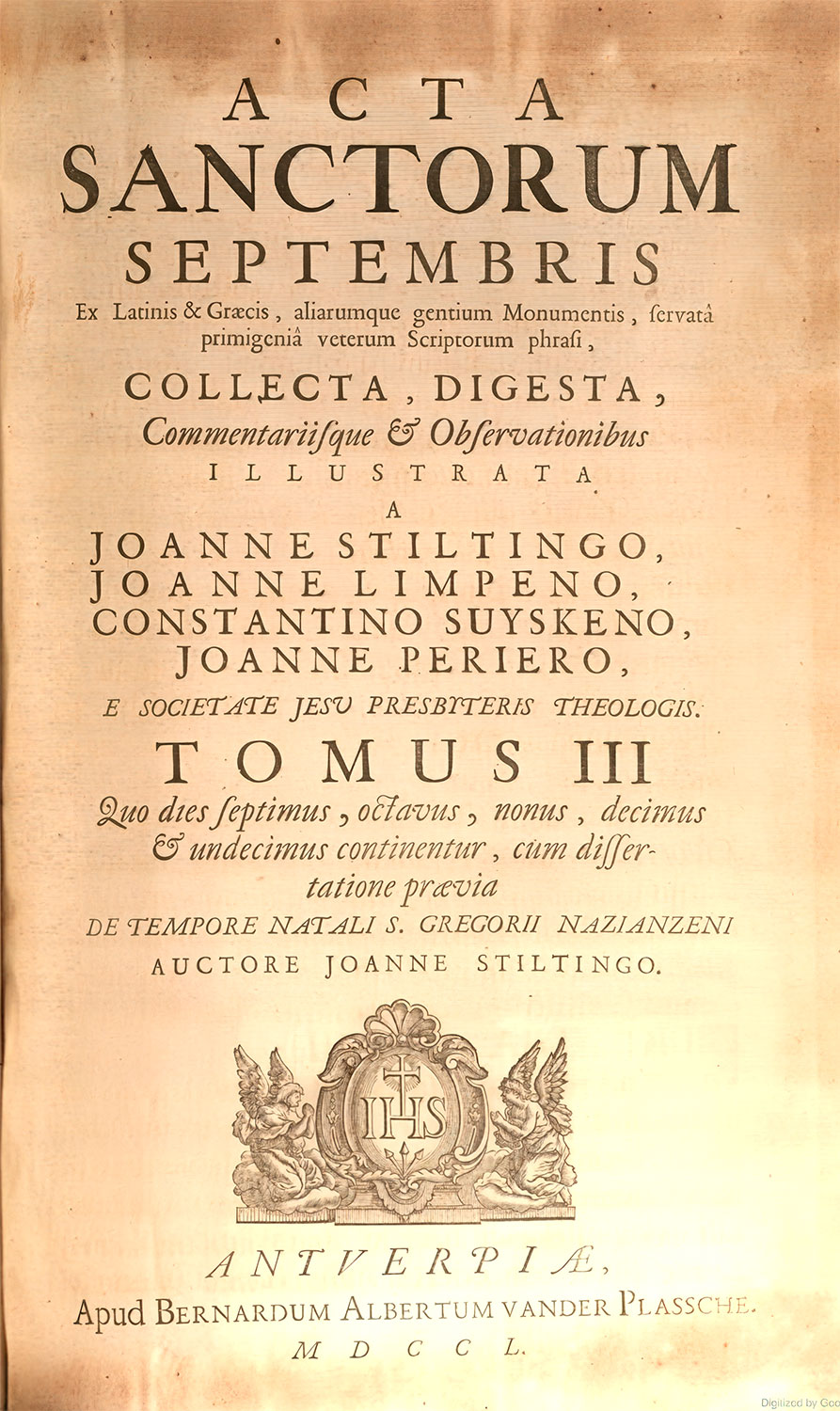
Jean Périer and the 1750 Investigation of Saint Véran
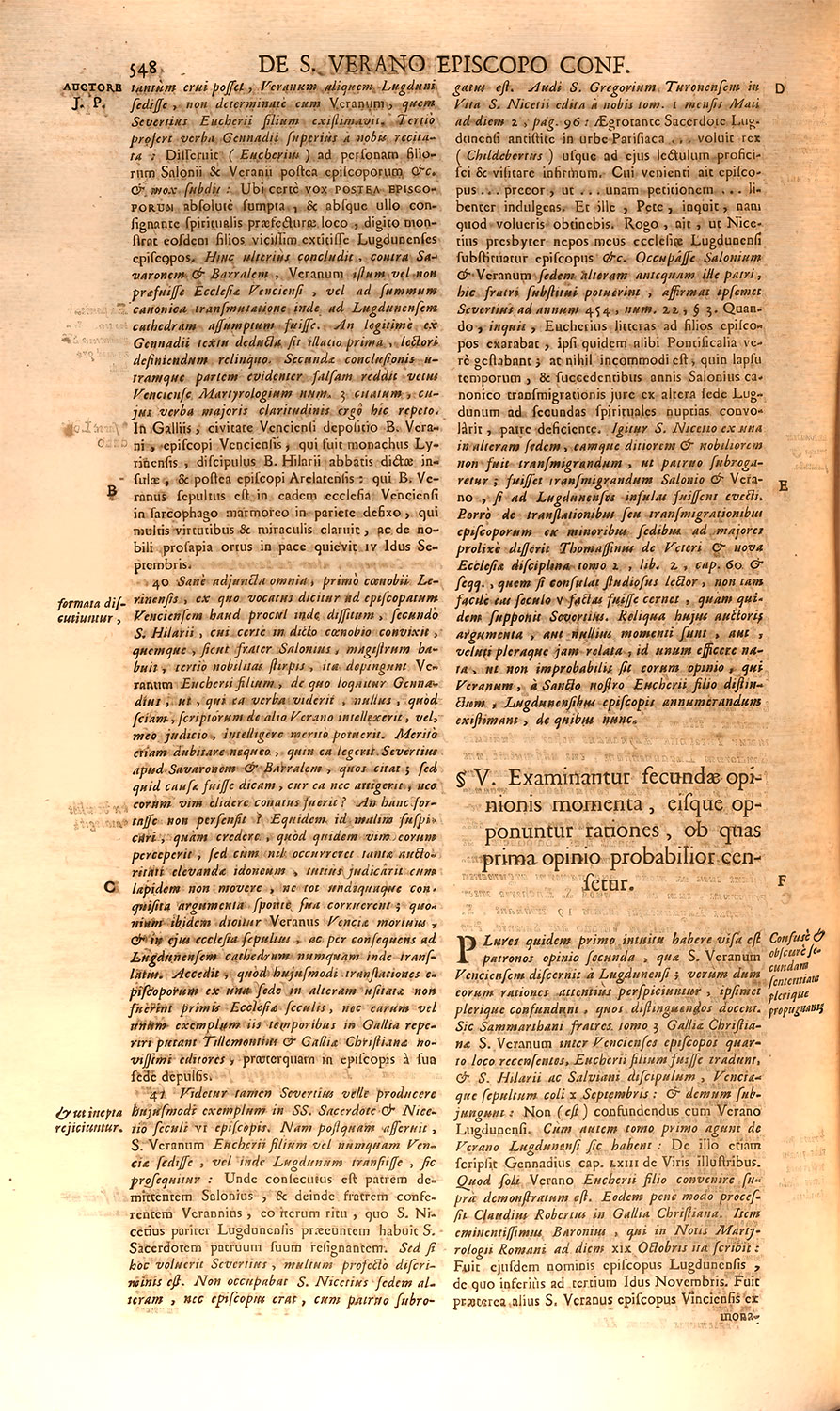
In 1750, the third volume of the September section of the Acta Sanctorum was published in Antwerp, containing the lives and historical accounts of saints commemorated between September 7 and 11. Among them was an extensive study entitled De S. Verano Episc. Confessore Venciæ in Gallia (On Saint Véran, Bishop and Confessor, at Vence in Gaul), placed under September 10, the traditional date of his death. The article was written by the Jesuit scholar Jean Périer (Joannes Perierus), whose initials, J. P., appear beneath the heading. Rather than presenting a conventional biography filled with stories of miracles and religious devotion, Périer called his work a Commentarius Historicus, or Historical Commentary. He aimed to examine the surviving evidence, compare the often contradictory accounts of earlier writers, and establish, as far as possible, what could reliably be known about the life of Saint Véran.
Périer faced a serious problem from the outset. As he explains in the third section of his commentary, he could not locate an ancient biography of Véran, either in print or in manuscript. Echoing an observation made more than a century earlier by Vincent Barralis (a 17th-century monk and historian of the Abbey of Lérins), he suggested that such a biography might once have existed and then been lost, or perhaps never been written at all. Curiously, Périer mentions nothing of the Life of Saint Véran, composed around 1660 by Jacques Barcillon, a canon of Vence Cathedral. Although Barcillon’s manuscript had existed for nearly ninety years, it remained unpublished and was apparently preserved locally at Vence. Périer was likely unaware of its existence, though this cannot be established with certainty. In any event, Barcillon’s largely devotional account would have provided little of the ancient historical evidence Périer was seeking.
Périer was therefore obliged to reconstruct the saint’s life from scattered references in ancient writings, ecclesiastical documents, and the work of later historians. His investigation, divided into six sections, covers an extraordinary range of subjects, including Véran’s appearance in the martyrologies, the antiquity of his veneration at Vence, the churches and monasteries dedicated to him, his relics, his supposed family relationships, and his association with the monastery of Lérins. He also examines surviving correspondence involving Popes Leo the Great and Hilarius, providing some of the strongest contemporary evidence for the activities of a fifth-century bishop named Véran.
At the heart of Périer’s investigation, however, lies the question that continues to make Véran’s history so intriguing: Was Saint Véran of Vence the same man as the Saint Véran associated with Lyon, or were they two different bishops whose lives had become confused? Périer examines the competing arguments in considerable detail, frequently challenging the conclusions of respected earlier scholars, including Cardinal Baronius (a 16th-century Italian cardinal and ecclesiastical historian), Jean Savaron (a 16th- and 17th-century French historian and classical scholar), Vincent Barralis, and others. He ultimately favors the view that only one fifth-century bishop, Véran, appears in these conflicting accounts: the son of Saint Eucherius, brother of Saint Salonius, and Bishop of Vence. But how convincing is his reasoning, and how reliable are the documents on which it rests? In the following examination, we will work through Périer’s commentary in its original order, explore his sources, consider his arguments, and distinguish what the historical evidence actually tells us from what remains a matter of interpretation.
Rather than reproduce Périer’s entire article here, I have provided a link to the original Latin text and complete French and English translations, allowing you to follow his arguments alongside my examination of his work.
I. Saint Véran’s Commemoration, Veneration, Churches, and Monastery
The Saint’s Commemoration in the Religious Calendars; the Antiquity of His Veneration; Churches Dedicated to Him; a Monastery Built and Named in His Honor.
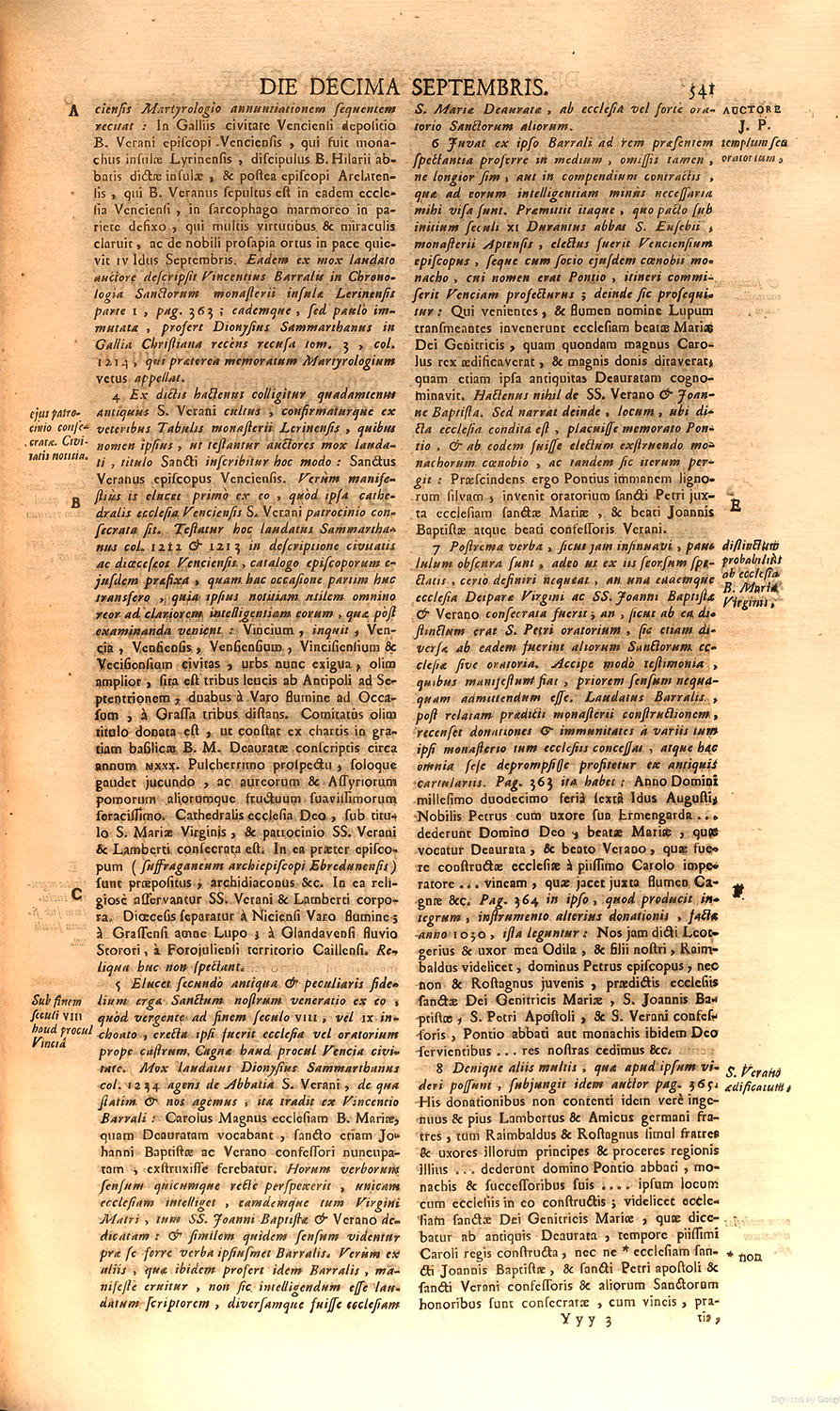
Paragraphs 1-11
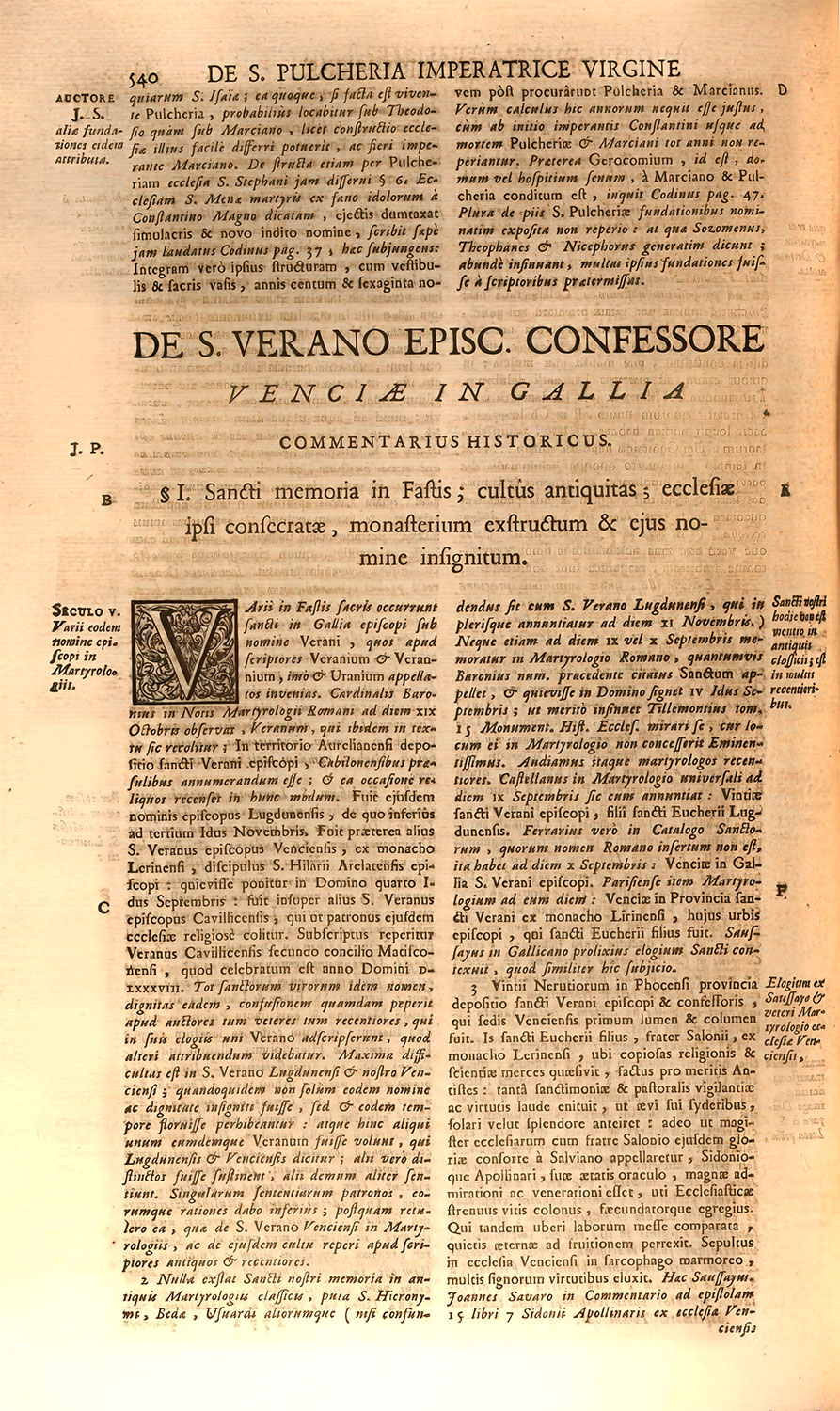
The Problem of the Many Saint Vérans
Périer begins his investigation by acknowledging one of the principal difficulties in reconstructing the life of Saint Véran: several bishops with the same name appear in ancient religious calendars and historical writings. To complicate matters further, their names were not always written consistently, appearing in various forms, including Veranus, Veranius, Verannius, and even Uranius. Drawing on Cardinal Baronius’s annotations to the Roman Martyrology, Périer identifies several bishops named Véran associated with different cities in Gaul. His principal concern, however, is the possible confusion between Véran of Vence and Véran of Lyon, both traditionally placed in the fifth century. Some historians treated them as separate individuals, while others believed they were the same man.
Rather than settle this question immediately, Périer announces that he will first examine the evidence for Véran’s commemoration in religious calendars and the history of his veneration. He begins by observing that Véran of Vence does not appear under his own name in the older standard martyrologies, including those attributed to Saint Jerome, Bede, and Usuard. Nor does he appear on September 9 or 10 in the Roman Martyrology, even though Baronius explicitly acknowledges his existence in an annotation under October 19. Périer notes that the historian Louis-Sébastien Le Nain de Tillemont had already expressed surprise at this omission.
More recent martyrologies, however, provide several references. Claude Chastelain commemorates Véran on September 9, while Filippo Ferrari and the Paris Martyrology place him on September 10. André du Saussay includes a considerably longer account in his Martyrologium Gallicanum, describing Véran as the son of Eucherius, the brother of Salonius, a former monk of Lérins, and eventually Bishop of Vence. Saussay also refers to his burial in a marble sarcophagus and the miracles attributed to him. Périer reproduces these accounts as evidence of the traditions associated with Véran, although their historical reliability is another matter.
The Mysterious Martyrology of Vence
One of the most intriguing sources Périer mentions is an apparently ancient Martyrology of the Church of Vence. He reproduces a passage that Jean Savaron quotes in his 1609 commentary on the letters of Sidonius Apollinaris. According to this account, Véran had been a monk at Lérins, where he studied under Saint Hilary, later Bishop of Arles. It also claims that he came from a noble family, was buried in a marble sarcophagus set into the wall of the church at Vence, and died on September 10. The same passage subsequently appeared in Vincent Barralis‘s history of Lérins and, with minor alterations, in the Gallia Christiana.
The difficulty is that the age and origins of this supposed Vence martyrology remain uncertain. Périer accepts its description as an ancient source, but provides no information about the manuscript itself, when it was written, or where it was preserved. Moreover, the fact that Savaron, Barralis, and the Sainte-Marthe brothers (17th-century French historians and compilers of the Gallia Christiana) all reproduce substantially the same passage does not necessarily mean that three independent historical sources confirm the story. They may simply be repeating a single earlier account. This distinction matters, especially since the document includes several biographical details that could explain the confusion between Véran of Vence and Véran of Lyon.
Churches Dedicated to Saint Véran
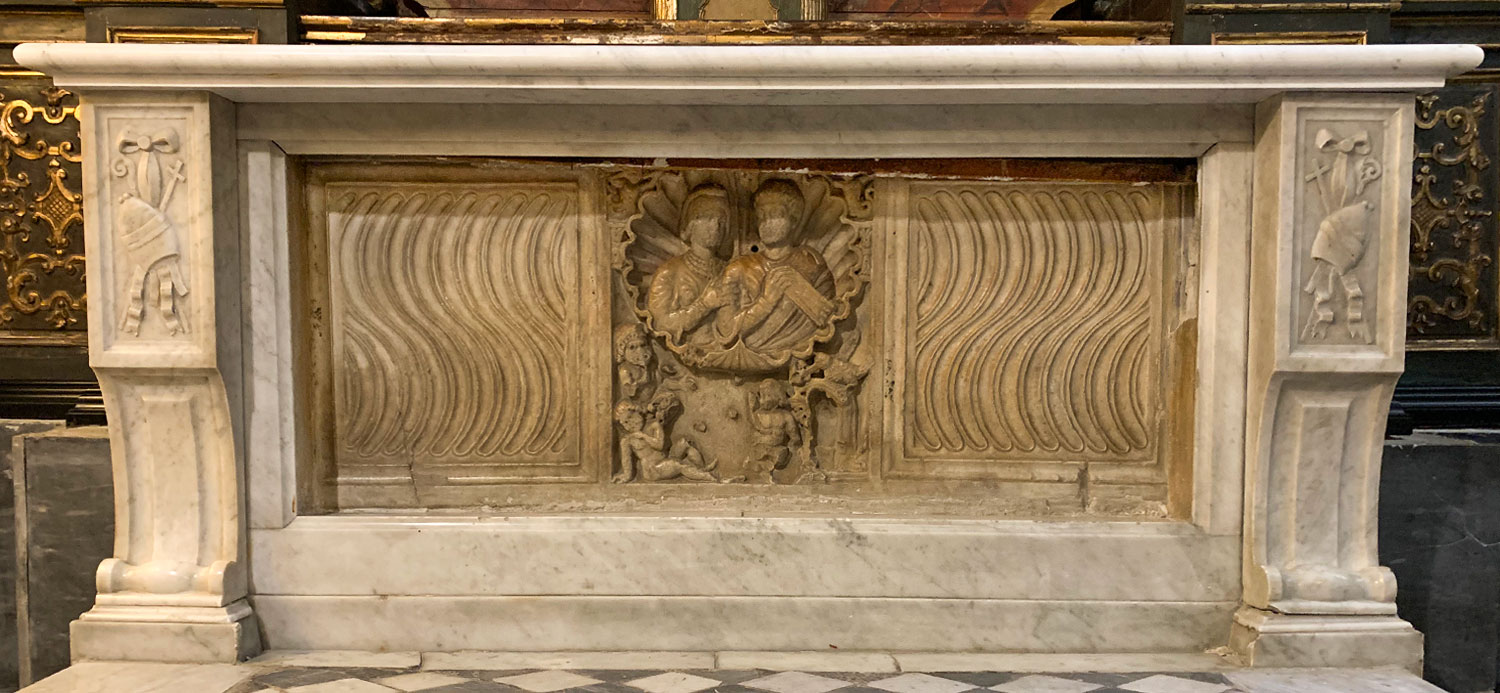
Périer next turns from written accounts of Véran’s life to something more tangible: the churches and religious institutions dedicated to him. He argues that these establishments demonstrate the antiquity of the saint’s veneration, even if the precise details of his life remain uncertain. He begins with Vence Cathedral, drawing on Denis de Sainte-Marthe‘s description in the Gallia Christiana. The cathedral, dedicated to the Blessed Virgin Mary and associated with the patronage of Saints Véran and Lambert, was also said to preserve the remains of both saints. For Périer, this provided convincing evidence that Véran had long occupied an important place in the city’s religious life.
He then turns to a religious establishment some distance from Vence, near Cagnes and the River Loup. Here, according to the accounts preserved by Barralis, stood an ancient church dedicated to the Virgin Mary, known as Sainte-Marie Deaurata, or Our Lady of the Golden Church. Its foundation was traditionally attributed to Charlemagne, who was said to have built and generously endowed it. Nearby stood other religious buildings, or oratories, associated with Saints Peter, John the Baptist, and Véran. Périer examines the wording of the surviving accounts with considerable care, trying to determine whether these were separate churches or several dedications within a single building. He concludes that the church of the Virgin Mary was distinct from at least one other religious building. However, he acknowledges that the precise arrangement of the remaining chapels cannot be established with certainty.
The Monastery of Saint Véran and the Evidence of Medieval Charters
The strongest documentary evidence in this first section concerns the Monastery of Saint-Véran, established near the Loup River in the early eleventh century. Drawing extensively on Barralis, Périer explains how Durantus, formerly abbot of Saint-Eusèbe at Apt, became Bishop of Vence and brought with him a monk named Pontius. The latter chose the site of the ancient church of Sainte-Marie Deaurata for a new monastic community. While clearing the surrounding land, he reportedly discovered older religious buildings associated with several saints, including Véran. The establishment eventually became known as the Monastery of Saint-Véran.
Périer supports this account with extracts from medieval donation charters preserved by Barralis. A document dated 1012 records a gift from a noble couple, Peter and Ermengarda, to the churches of the Virgin Mary and Saint Véran. Another donation, which Périer dates to 1030, names several churches or chapels at the site and records the transfer of property to the monastery. These documents are especially valuable because, unlike the much later biographical traditions surrounding the fifth-century bishop, they provide specific evidence of religious institutions dedicated to Véran in the Middle Ages. They also reveal the important role local noble families played in supporting the monastery through gifts of land, vineyards, and other property.
Of particular interest is a charter dated 1050, which Périer reproduces in full. In this document, Pontius, now abbot of the Monastery of Saint-Véran, transfers the establishment and its possessions to the Abbey of Lérins, with the agreement of Durantus, Bishop of Vence, and several other ecclesiastical and secular authorities. Pontius explains that he wants to secure the monastery’s future and, especially, preserve the dignity of its ancient name. He claims the establishment has borne that name since the time of Charlemagne, who built and endowed it. The charter provides substantial evidence for the monastery’s existence, its relationship with Lérins, and the importance attached to its association with Saint Véran. A modern scholarly edition also preserves its text, allowing Périer’s account to be compared with later historical research.
Périer concludes the section by addressing an apparent contradiction. If Pontius had established the monastery in the eleventh century, how could its foundation be attributed to Charlemagne, who had died more than two centuries earlier? He resolves this by distinguishing between the earlier churches, supposedly built under Charlemagne, and the monastic community Pontius later organized. In this way, he argues, both accounts could be correct. This is a reasonable interpretation of the documents available to him, although attributing the original buildings to Charlemagne remains tradition rather than an independently verified fact.
Taken together, Périer’s material provides persuasive evidence that the eleventh century saw Saint Véran venerated at Vence and in the surrounding region, and that religious institutions bearing his name were firmly established there. It does not establish whether all the biographical traditions attributed to the fifth-century bishop are historically accurate. That distinction is crucial. The existence of a medieval monastery dedicated to Saint Véran demonstrates the importance of his cult. Nevertheless, it does not tell us for certain who Véran really was or which details of his life are historically reliable.
II. Saint Véran’s Relics, Feast Days, and His Supposed Benedictine Connections
The Saint’s Relics and His More Recent Veneration; His Incorrect Inclusion by Some Among the Saints of the Order of Saint Benedict.
Paragraphs 12-20
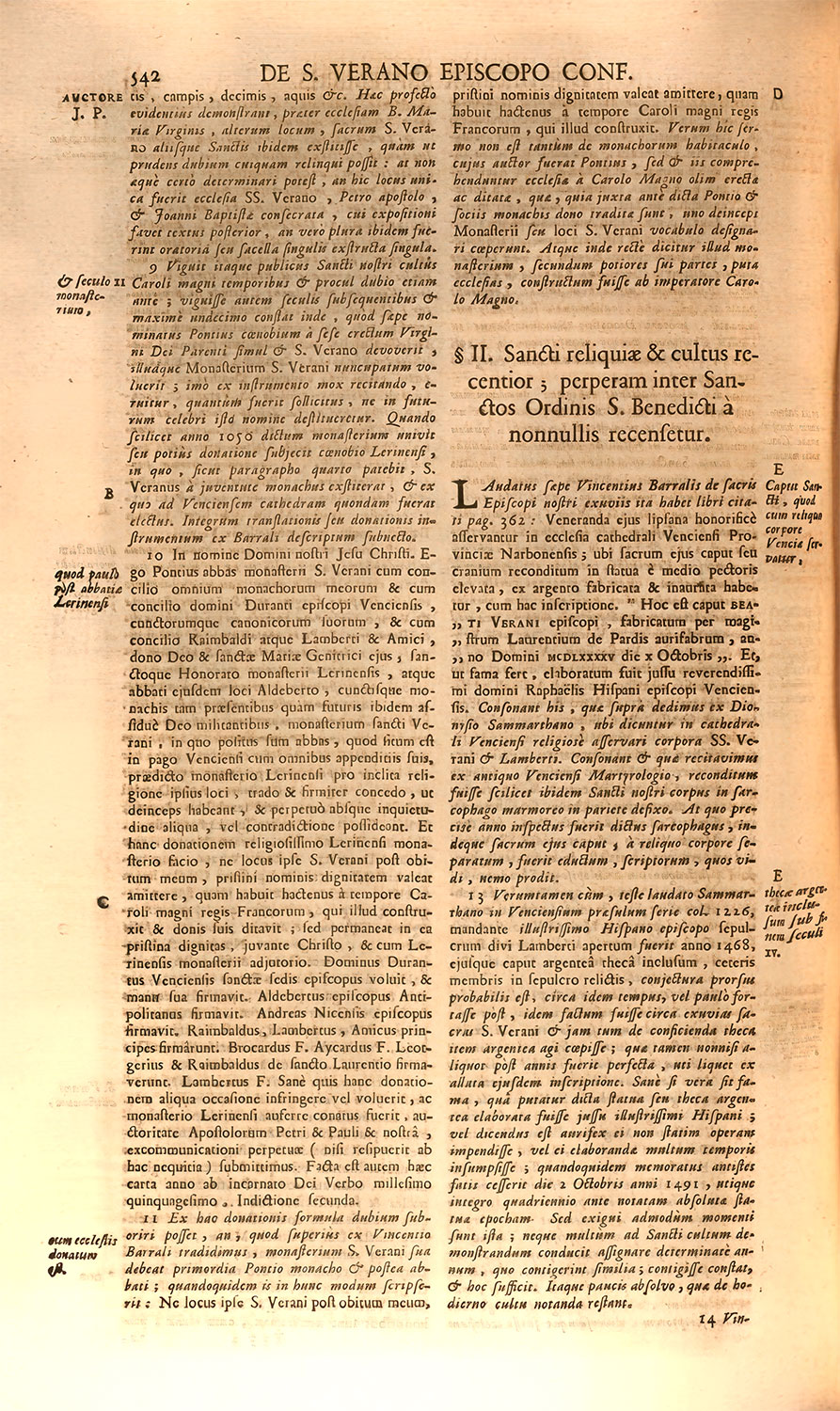
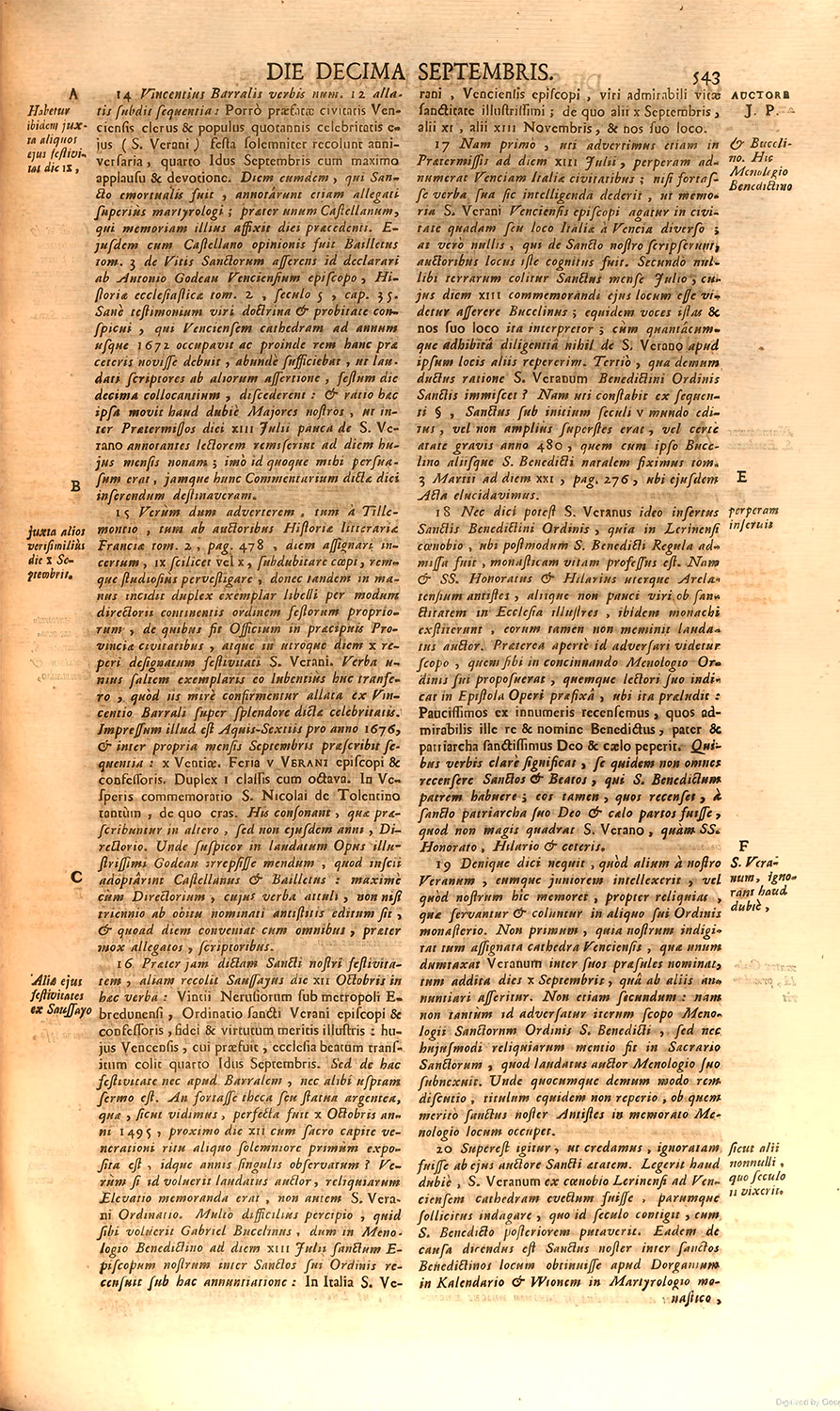
The Relics of Saint Véran
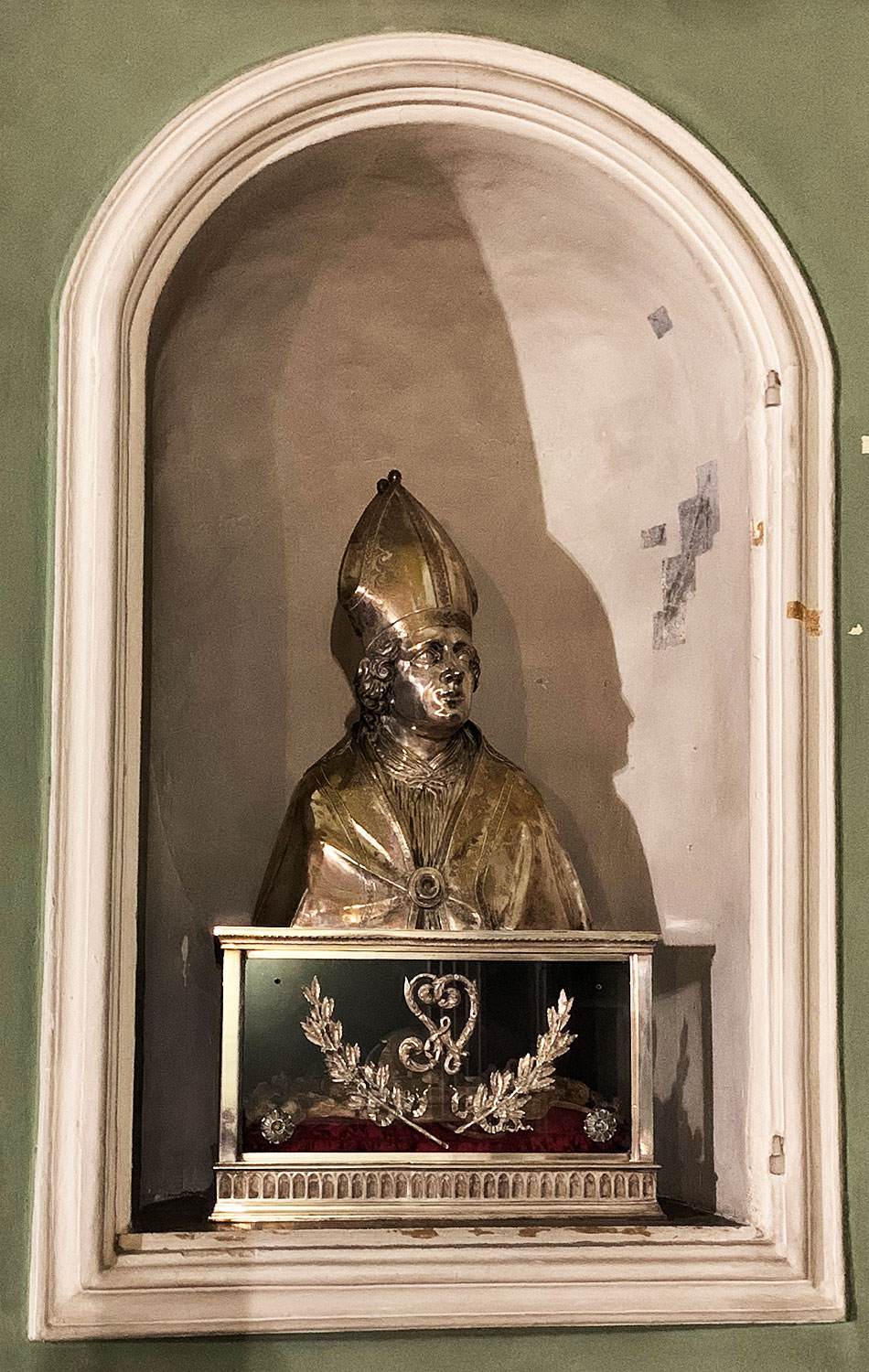
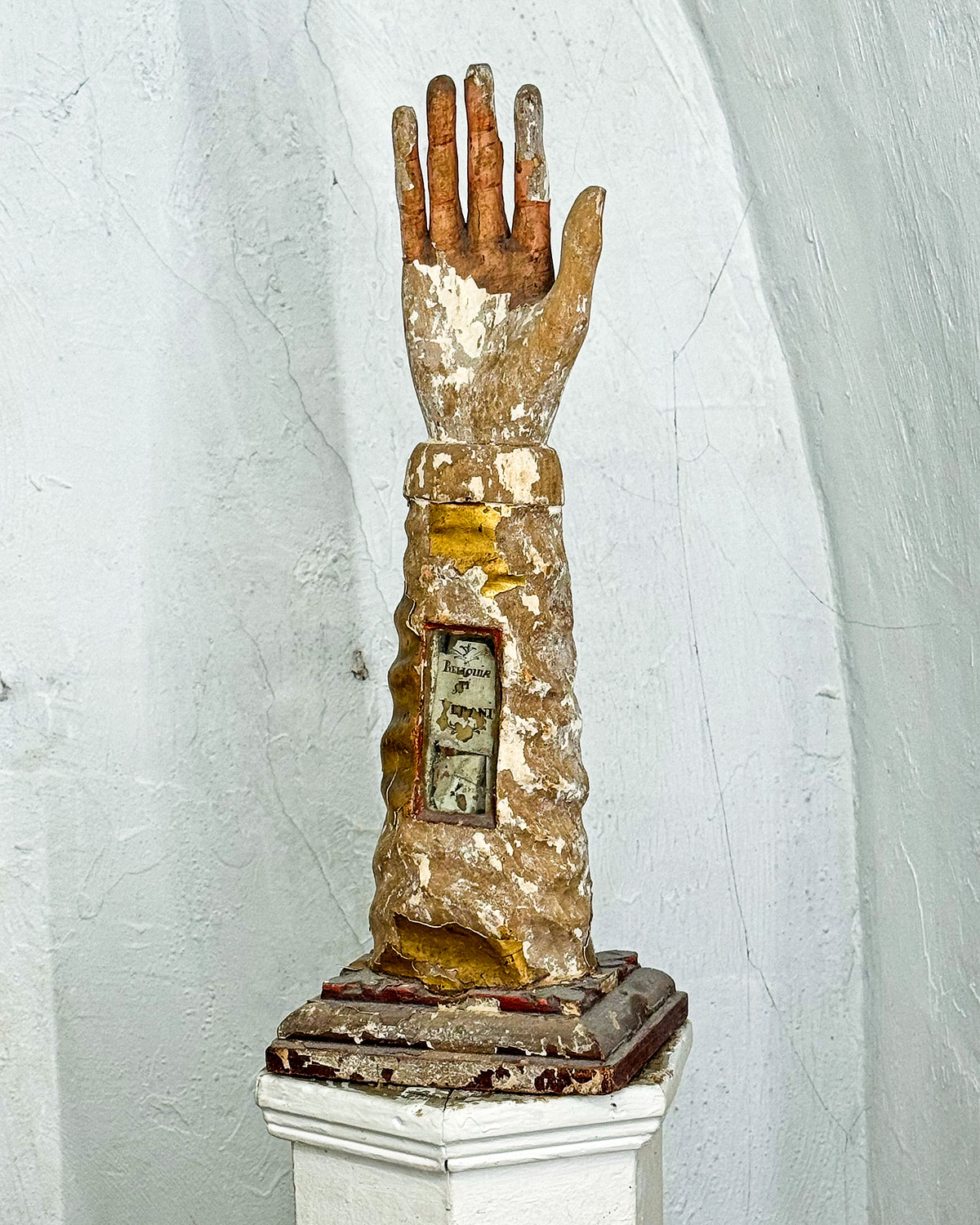
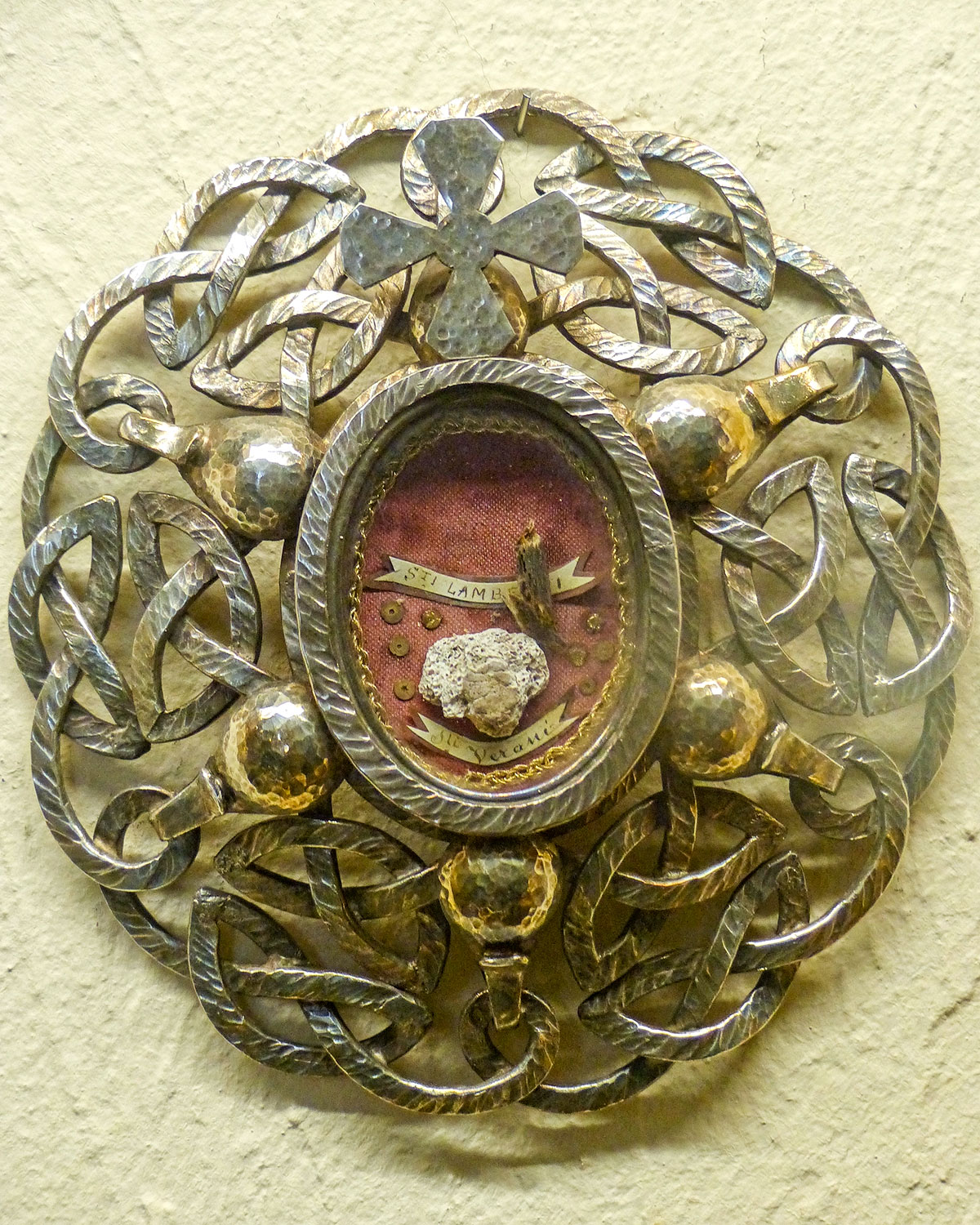
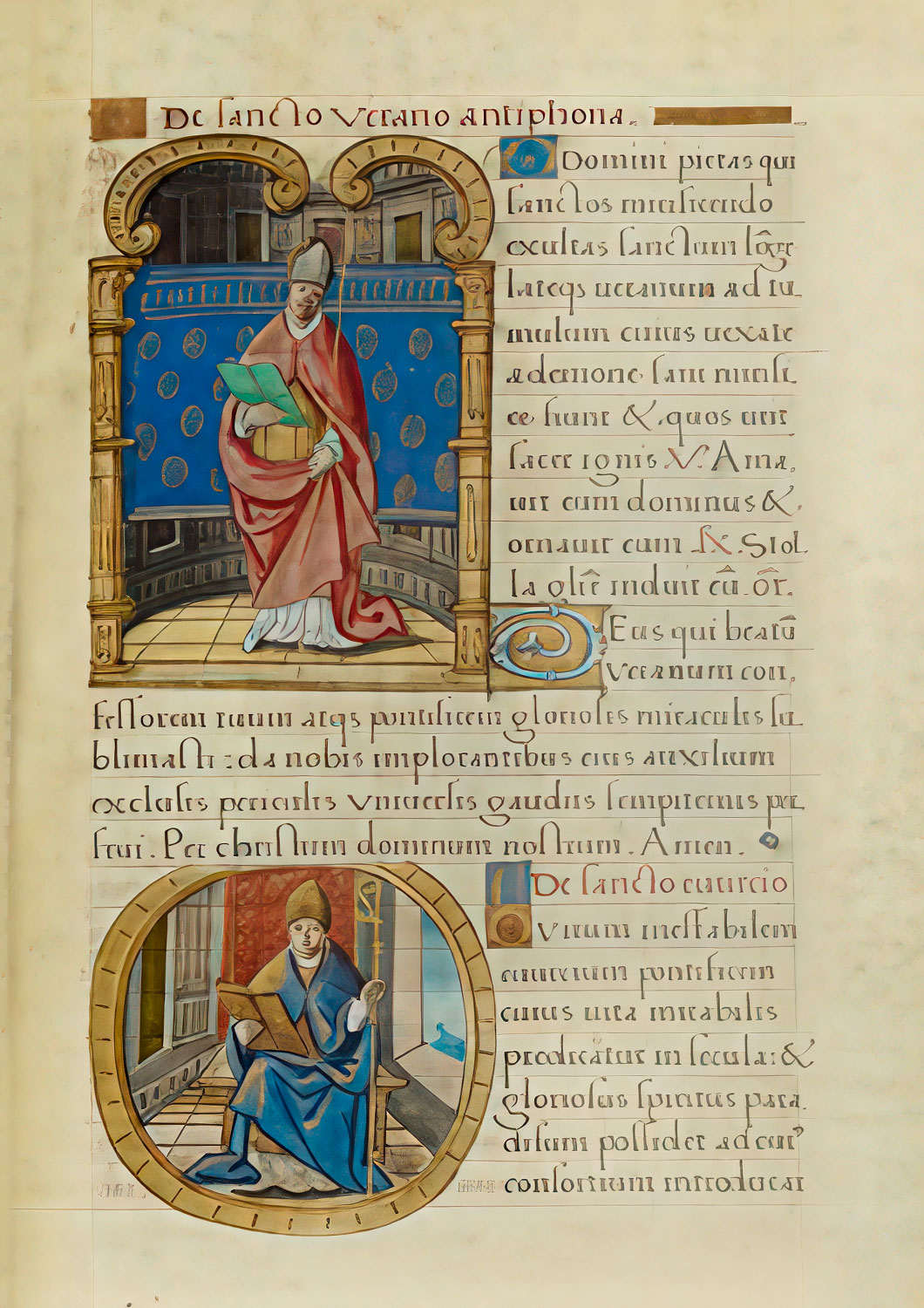
After examining the antiquity of Saint Véran’s veneration, Périer turns to the saint’s physical remains and their preservation at Vence Cathedral. Once again, his principal source is Vincent Barralis, who describes Véran’s skull being preserved in an elaborate gilded silver reliquary bust, made by a goldsmith named Laurent de Pardis. According to the inscription Barralis reproduces, the work was completed on October 10, 1495. The remainder of the saint’s body was believed to have rested in a marble sarcophagus set into the cathedral wall, an arrangement also described in the ancient Martyrology of Vence. Périer readily accepts these accounts as evidence of the saint’s longstanding veneration, but acknowledges that he has been unable to establish precisely when the tomb was opened and the skull separated from the other remains.
To investigate this question, Périer turns to the history of Saint Lambert, Vence’s other patron saint. According to Denis de Sainte-Marthe, Bishop Raphaël Monso opened Lambert’s tomb in 1468 and placed his skull in a silver reliquary. Périer suggests that something similar may have happened to Véran’s remains around the same time. However, there is a chronological difficulty. The reliquary of Saint Véran was reportedly commissioned by Bishop Monso, yet the bishop died in 1491, four years before the date recorded on the bust. Périer suggests the work may have been commissioned during Monso’s lifetime but completed years after his death. He does not try to settle the matter, noting that the precise dates matter less than the evidence they provide for the veneration of Saint Véran.
Although Périer could not have known what would eventually become of this magnificent reliquary, its later history is particularly interesting. The original fifteenth-century silver bust disappeared during the French Revolution, when many of Vence Cathedral’s valuable religious objects were confiscated. The silver-plated reliquary busts displayed in the cathedral today were made in the nineteenth century, although several older reliquaries have also survived.
You can read a more in-depth account of the relics, reliquaries and busts of Saint Véran and Saint Lambert in this article: Devotion, History and Art: The Relics, Reliquaries and Busts of Saint Véran and Saint Lambert of Vence.
September 9 or September 10? A Disagreement Over the Feast Day
Périer next investigates a seemingly simple question: on which day was Saint Véran’s feast actually celebrated? Most of the sources he had examined, including Barralis, Ferrari, and Saussay, identified September 10 as the date of Véran’s death and annual commemoration. However, Claude Chastelain placed the feast on September 9, and Adrien Baillet (a 17th-century French Catholic priest, theologian, and historian of the saints) agreed, citing Antoine Godeau, who served as Bishop of Vence from 1639 until he died in 1672. Given Godeau’s familiarity with Vence’s religious traditions, this was a persuasive argument. Indeed, Périer admits he initially accepted September 9 himself and had already intended to date his entire commentary to that date.
His opinion changed when he encountered references to uncertainty in Tillemont’s writings and in the authors of the Literary History of France. Determined to investigate further, he eventually discovered two copies of a liturgical directory specifying the local religious feasts celebrated in the principal cities of Provence. One, printed at Aix-en-Provence in 1676, explicitly identifies September 10 as the feast of Saint Véran at Vence. It also describes the celebration as a first-class double feast with an octave, indicating that it was one of the more important events in the local religious calendar. Both directories agreed on the date, convincing Périer that September 10 was correct. He therefore suspected that an error had entered Godeau’s work and that Chastelain and Baillet had subsequently repeated it.
This is an interesting example of Périer’s willingness to reconsider an opinion when confronted with new evidence, even when the earlier interpretation had been supported by distinguished scholars. His conclusion about the traditional feast day at Vence is convincing, especially because the local liturgical directory provides direct evidence of seventeenth-century religious practice. However, it is worth remembering that establishing a feast date does not necessarily establish the actual date of a saint’s death, especially when the individual lived more than a thousand years before the surviving documentation.
The Mysterious October 12 Commemoration
Périer also notices an additional commemoration recorded by André du Saussay in his Martyrologium Gallicanum. Under October 12, Saussay refers to the ordination of Saint Véran as Bishop of Vence, distinguishing it from the commemoration of his death on September 10. Périer is puzzled by this reference, since neither Barralis nor the other writers he consulted mention an annual celebration on October 12. He wonders whether the date might have originated with the inauguration of the saint’s silver reliquary in 1495. Since the bust was reportedly completed on October 10, perhaps it was first displayed publicly, with the skull inside, during a solemn ceremony two days later.
It is an imaginative suggestion, but Périer himself recognizes an obvious difficulty. If Saussay were commemorating the relics’ presentation or elevation, why would he describe the event as Véran’s ordination? There is no surviving evidence cited by Périer for a ceremony on October 12, 1495, and no reason to assume that the two dates are connected beyond their proximity in the calendar. This is one of those instances where Périer offers a possible explanation for a discrepancy without being able to establish whether it is correct.
Was Saint Véran Really a Benedictine?
The final part of this section concerns a different kind of historical confusion. Périer is particularly surprised that Gabriel Bucelin, in his Menologium Benedictinum, included Saint Véran among the saints of the Benedictine Order. Bucelin’s entry, placed under July 13, introduces Véran as a bishop of Vence in Italy, mentions commemorations on September 10 and November 11 and 13, and refers somewhat ambiguously to celebrating him in his proper place. Périer finds several problems with this account, beginning with the geographical error. Vence, of course, is in Provence, not Italy. He also finds no evidence that Saint Véran was ever traditionally celebrated in July.
His most substantial objection, however, concerns chronology. If Véran lived during the fifth century, as Périer maintains, he could not have belonged to an order established under the influence of Saint Benedict, whose birth Périer places around 480. Véran’s supposed monastic life at Lérins would therefore have preceded the development of Benedictine monasticism. Périer acknowledges that the monastery of Lérins later adopted the Rule of Saint Benedict, but correctly observes that this does not make its earlier monks Benedictines. He reinforces his argument by citing Bucelin’s introduction, which describes his work as a collection of saints belonging to the spiritual tradition Benedict established.
Périer extends the criticism to Benedict Dorganius (a 17th-century compiler of a Benedictine calendar of saints) and Arnold Wion (a 16th-century Benedictine monk and ecclesiastical historian), both of whom included Saint Véran in monastic calendars under November 11. Wion is particularly interesting because he explicitly distinguishes Véran of Vence from another bishop of the same name associated with Lyon. He also admits he cannot determine when Véran of Vence lived, since the Lérins records provide no information about his historical period. Périer interprets this uncertainty as evidence that Wion, like Bucelin and Dorganius, failed to recognize that Véran lived before Saint Benedict.
Périer’s principal chronological objection is sound, but his criticism of the monastic writers may be somewhat too severe. Inclusion in a Benedictine calendar does not necessarily demonstrate that its compiler believed every saint mentioned had formally belonged to the Benedictine Order. Some collections also commemorated figures associated with earlier monastic traditions. Nevertheless, Périer identifies a genuine problem: later writers could easily project the religious institutions of their own time onto saints who lived centuries before those institutions existed.
By the end of this second section, Périer has explored a remarkable variety of evidence, from medieval tombs and silver reliquaries to conflicting feast days and monastic calendars. Once again, his investigation reveals how much of Véran’s history has been shaped by later religious traditions, some well documented and others far less certain. His discussion of the Benedictine question also leads naturally to the subject of his next section, where he attempts to establish Véran’s family background, birthplace, and the period in which he actually lived.
III. Saint Véran’s Parents, Birthplace, and the Period in Which He Lived
The Saint’s Distinguished Parents, Homeland, and the Period in Which He Lived.
Paragraphs 21-30
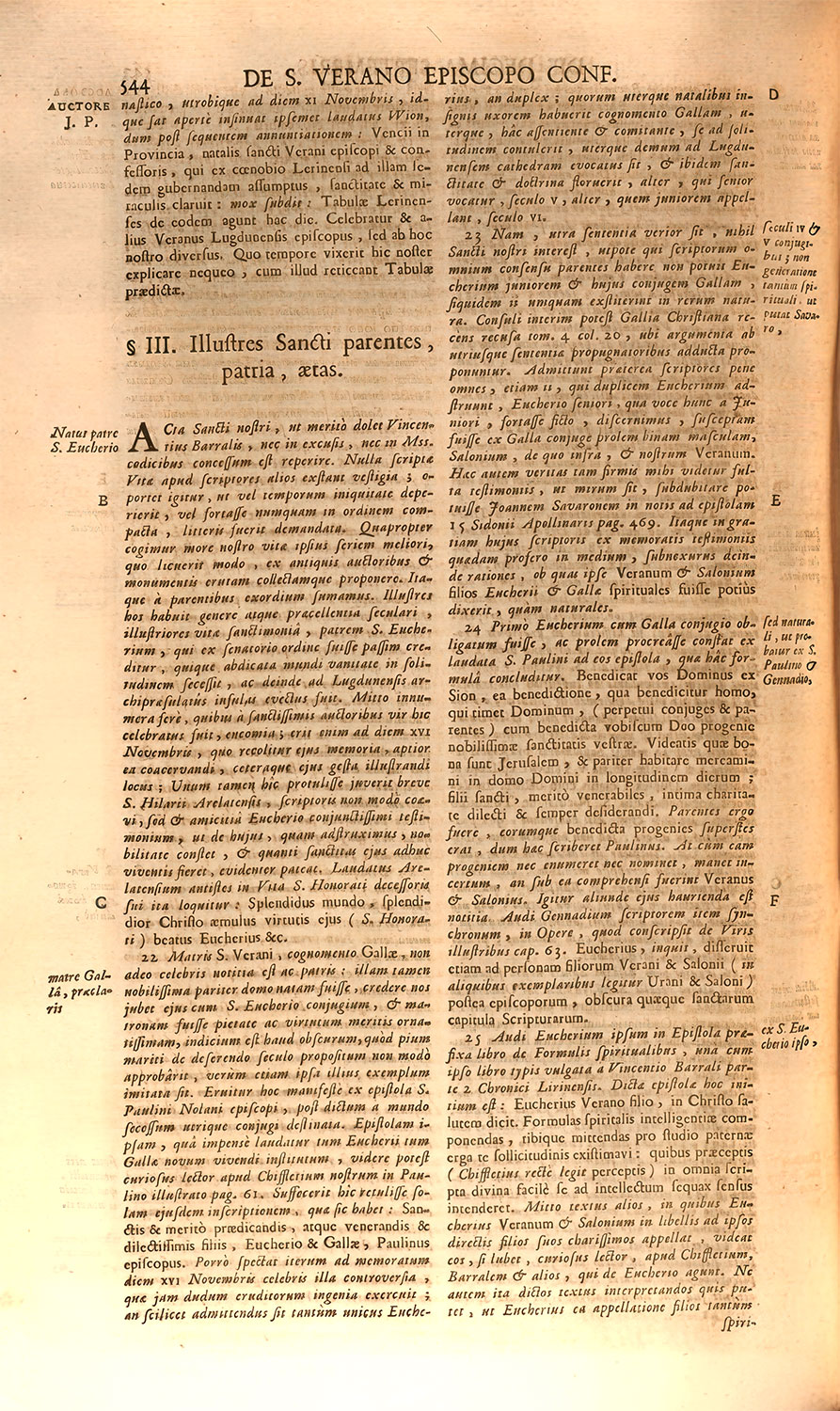
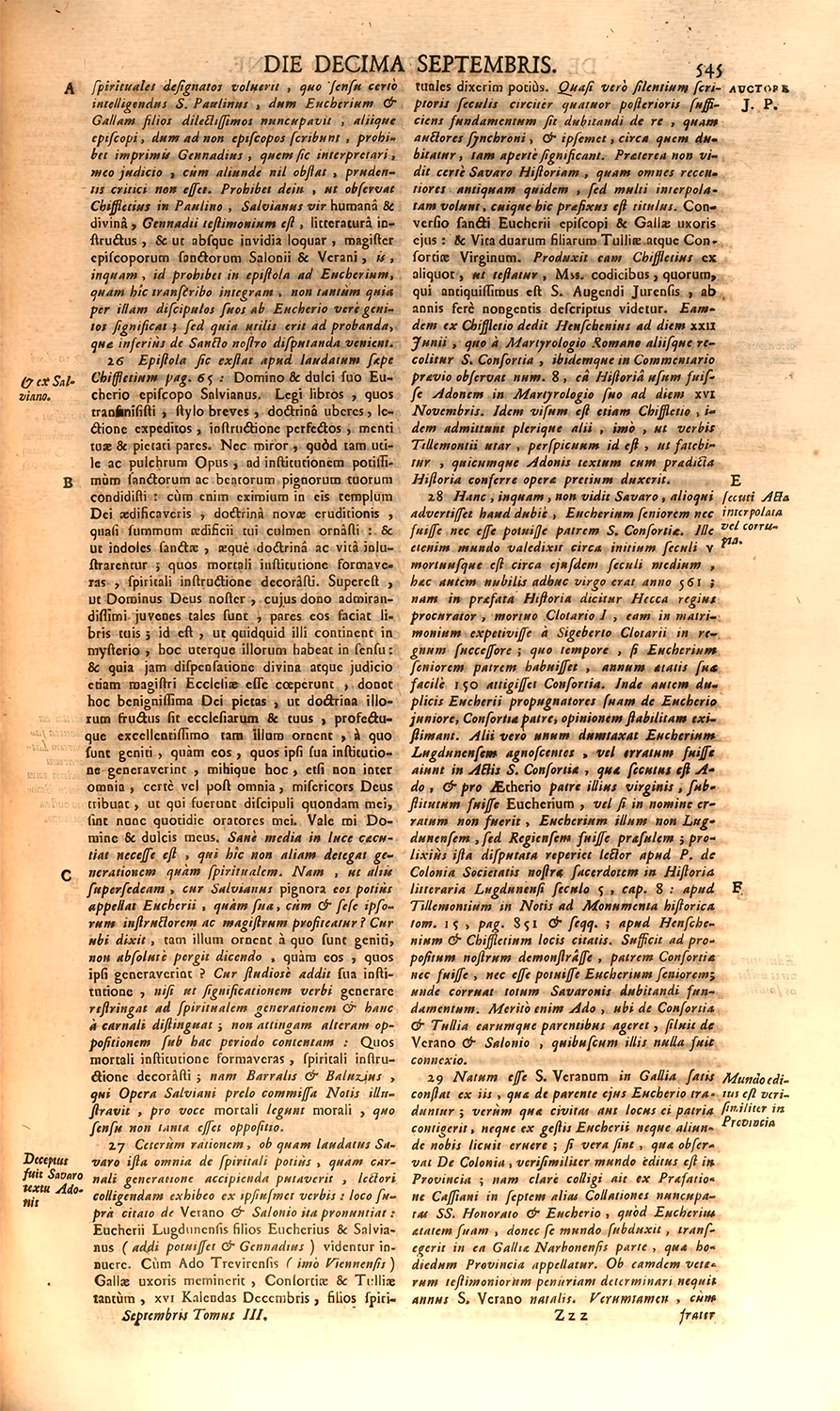
Reconstructing a Life Without a Biography
Périer begins his third section by confronting a problem that has troubled historians for centuries: the apparent absence of any ancient biography of Saint Véran. As Vincent Barralis had already observed, no written account of the saint’s life appears in printed books or surviving manuscripts. Périer suggests that such a biography might once have existed and then been lost, or that no complete account was ever written. Whatever the explanation, he has little choice but to reconstruct Véran’s life from scattered references in early Christian writings and historical documents. He begins with what he considers the most reliable information available: the identity of Véran’s parents.
According to Périer, Véran’s father was Saint Eucherius, an important early Church figure from a distinguished Gallo-Roman family, probably of senatorial rank. After abandoning his former worldly life, Eucherius joined the religious community at the monastery of Lérins and eventually became Bishop of Lyon. Périer quotes a contemporary description by Saint Hilary of Arles, who praises Eucherius as a man distinguished both by his worldly standing and his Christian devotion. This is valuable testimony because Hilary knew Eucherius personally. Although it tells us little directly about Véran, it helps establish the social and religious background of the family he is believed to have been born into.
Eucherius, Galla, and Their Children
Périer next introduces Véran’s mother, Galla, about whom we know considerably less. She was Eucherius’s wife and apparently shared his decision to adopt a life of religious devotion. Much of what we know about her comes from an important surviving letter by Saint Paulinus of Nola, addressed jointly to Eucherius and Galla. Paulinus praises the couple’s spiritual commitment and affectionately refers to their children. For Périer, this letter provides valuable contemporary evidence that Eucherius and Galla were genuinely married and had a family, rather than representing some purely symbolic religious relationship.
However, there was a complication. Some earlier historians proposed two different bishops named Eucherius, both associated with Lyon and both supposedly married to women named Galla. One would have lived in the fifth century, while the other was placed in the sixth. This extraordinary theory arose from attempts to reconcile conflicting religious traditions, particularly those surrounding Saints Consortia and Tullia, who were sometimes identified as Eucherius’s daughters. Périer regards the supposed second Eucherius with considerable skepticism, describing him as possibly imaginary. Fortunately, he observes, the question does not directly affect his investigation of Véran, since even those who accepted the existence of two men named Eucherius generally attributed Véran and Salonius to the earlier couple.
Were Véran and Salonius Really the Sons of Eucherius?
The principal controversy examined by Périer concerns the meaning of the word sons in early Christian writings. In his commentary on the letters of Sidonius Apollinaris, Jean Savaron questioned whether Véran and Salonius were Eucherius’s biological children. Because religious writers often addressed their followers or pupils as sons and daughters, Savaron suggested the relationship might have been spiritual rather than familial. Périer strongly disagrees and then assembles the evidence against this interpretation.
He begins with the letter from Paulinus of Nola, which clearly identifies Eucherius and Galla as spouses and parents. Nevertheless, Périer recognizes that Paulinus does not name their children, so the letter alone cannot establish that Véran and Salonius were among them. He therefore turns to Gennadius of Marseille, whose work De viris illustribus (On Illustrious Men) provides more specific information. Gennadius states that Eucherius wrote explanations of difficult passages of Scripture for his sons, Salonius and Veranius, who subsequently became bishops. This testimony is particularly significant because Gennadius wrote relatively close to the period in question and was familiar with the early Church’s writings.
Périer then introduces evidence from Eucherius himself. In the introductory letter to his Formulae spiritalis intelligentiae (Formulas of Spiritual Understanding), Eucherius addresses Véran as his son and explains that he composed the work out of fatherly concern for his education. Similar expressions appear in works addressed to Salonius. Although such language could occasionally describe a spiritual relationship, Périer argues that, when considered alongside the testimony of Paulinus and Gennadius, the natural interpretation is that the two young men were indeed Eucherius’s biological children.
His strongest evidence comes from Salvian, the fifth-century Christian writer who had been involved in the education of both brothers. Périer reproduces a letter from Salvian to Eucherius that praises the latter’s writings and the care he devoted to educating his children. In one particularly revealing passage, Salvian hopes the young men will bring honor both to the person who gave them birth and to those they will later bring forth through their teaching. Périer considers this distinction decisive. Salvian clearly separates physical parenthood from spiritual instruction, and he knew the family personally. If Eucherius were merely the brothers’ spiritual father, Périer asks, why would Salvian, who had actually taught them, make such a careful distinction?
Périer’s argument is persuasive. The combined testimony of Paulinus, Gennadius, Eucherius, and Salvian provides substantial evidence that Eucherius and Galla were the biological parents of Véran and Salonius. These sources also predate the religious traditions on which Savaron based his doubts. However, an important distinction remains. The early texts identify a son named Véran who later became a bishop, but they do not necessarily establish in which city he exercised that office. Demonstrating his family relationship is therefore an important step toward reconstructing his life. Still, this does not, by itself, settle whether Véran of Vence and Véran of Lyon were the same individual.
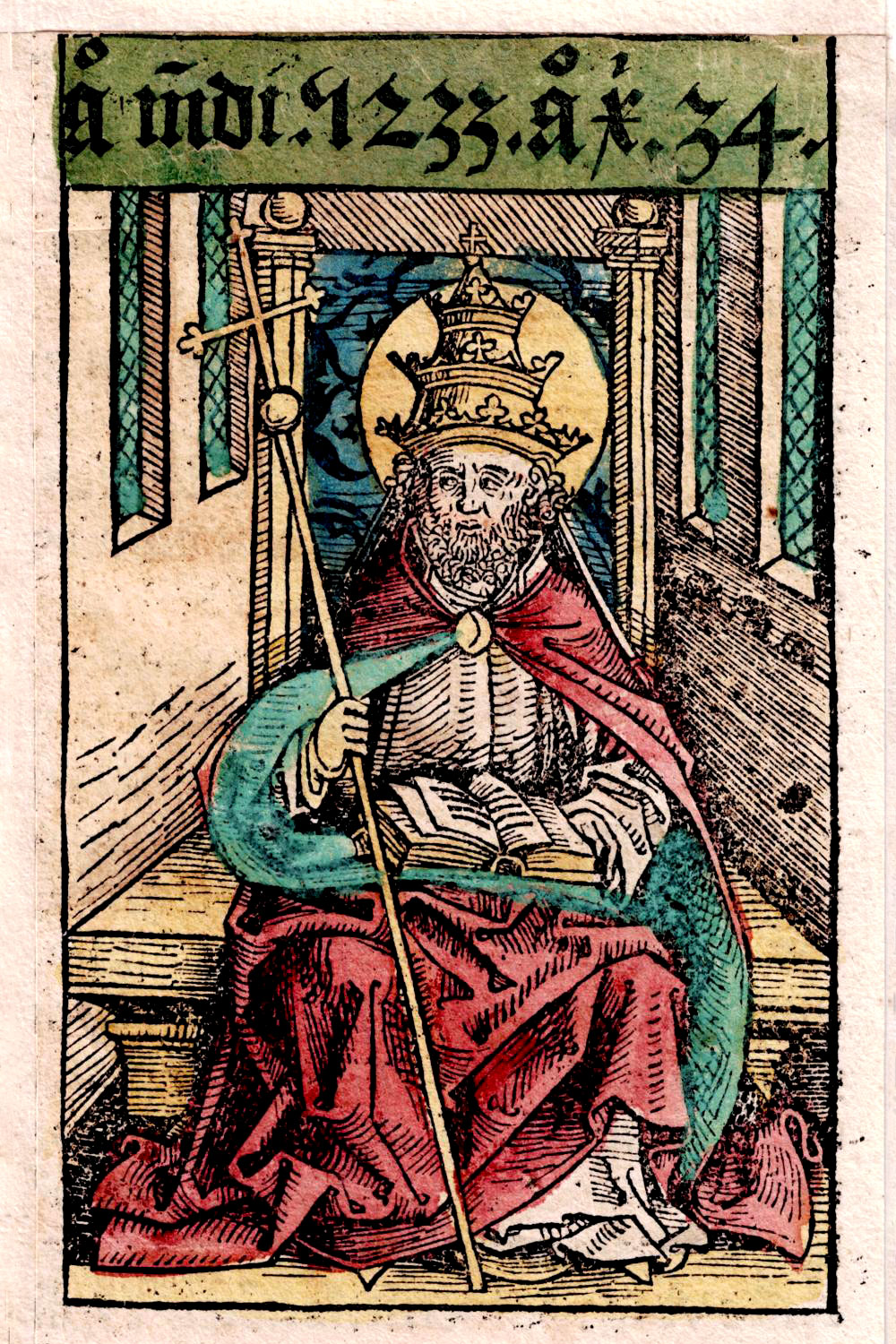
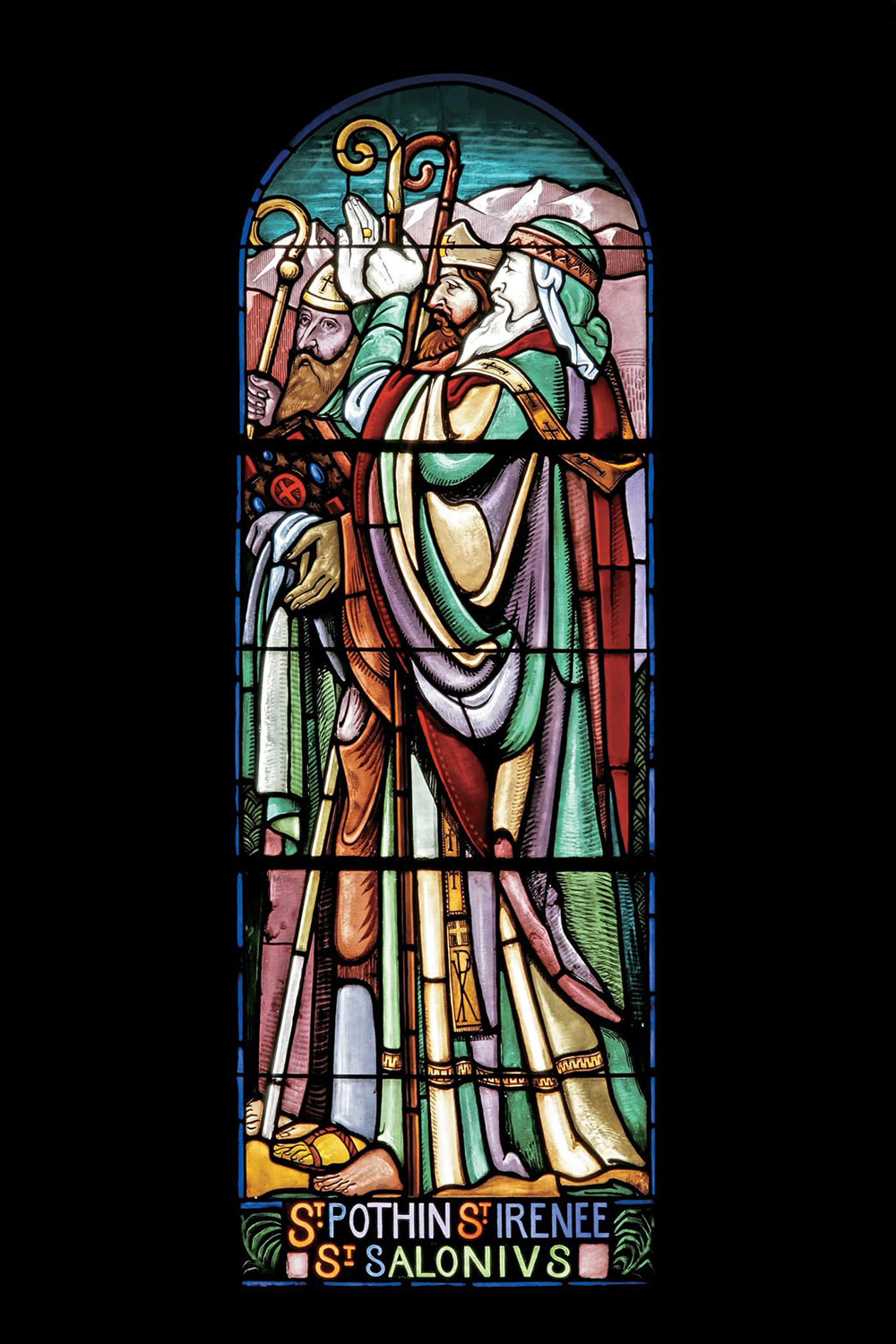
The Confusion Surrounding Consortia and Tullia
Why, then, had Savaron questioned what seems to be a fairly well-supported family relationship? Périer traces the problem to an account preserved by Ado of Vienne, the ninth-century martyrologist. On November 16, the feast of Saint Eucherius, Ado mentions his wife, Galla, and two daughters, Consortia and Tullia, without referring to Véran or Salonius. Savaron interpreted this omission as a reason to doubt that the two brothers were Eucherius’s biological sons. Périer finds this argument unconvincing. He maintains that the absence of their names in a much later account cannot outweigh the testimony of writers who lived in or close to the family’s own time.
To explain the discrepancy, Périer examines an account entitled The Conversion of Saint Eucherius, Bishop, and His Wife Galla, and the Life of Their Two Virgin Daughters, Tullia and Consortia. Pierre-François Chifflet published this narrative from medieval manuscripts, and the Bollandist Godfrey Henschen later reproduced it. It contains an important chronological detail: Consortia is described as a young unmarried woman during events associated with the death of King Chlothar I in 561. If she were the daughter of the fifth-century Eucherius, who died more than a century earlier, she would have been about 150 years old. The dates are plainly incompatible.
Different historians had attempted to resolve this problem in different ways. Some proposed a second, sixth-century bishop named Eucherius. Others suggested that Consortia’s father’s name had been transmitted incorrectly and should have been Ætherius, or that the Eucherius mentioned in the story was associated with Riez rather than Lyon. Périer discusses these possibilities but does not attempt to resolve every detail. His essential conclusion is that the Consortia tradition cannot reliably be used to cast doubt on Véran and Salonius’s parentage.
Here Périer provides another interesting example of the difficulties inherent in interpreting medieval hagiography. The chronological contradiction is substantial, but it does not necessarily reveal how the confusion originated. The account may have incorporated material from different individuals or periods, or later additions may have altered an earlier tradition. For Périer’s immediate argument, Ado’s much later reference to Consortia and Tullia offers insufficient grounds to reject the stronger early evidence for Véran and Salonius.
Where and When Was Saint Véran Born?
Having defended Véran’s family background, Périer turns to two questions with considerably less satisfactory evidence: where was he born, and when? He acknowledges that no surviving ancient source identifies Véran’s precise birthplace. Since Eucherius lived in Gaul, he reasonably concludes that Véran was also born there. More specifically, he suggests Provence as a probable birthplace, drawing on observations by the Jesuit historian Dominique de Colonia about Eucherius’s residence in southern Gaul before he entered monastic life.
The principal evidence comes from John Cassian‘s Conferences, a celebrated collection of teachings drawn from the traditions of the Egyptian desert monks. Cassian dedicated seven of these conferences to Honoratus and Eucherius, praising their commitment to religious life. Périer interprets this testimony as evidence that Eucherius had already established himself within the monastic movement before Honoratus left Lérins to become Bishop of Arles in 426. Since Véran and Salonius were born before their father withdrew from worldly life, Périer reasons that they must have been born some years earlier, probably toward the end of the fourth century or very early in the fifth.
He strengthens this chronological argument by referring to Salonius’s education at Lérins. According to a letter Eucherius wrote to Salonius, which Périer examines more fully in the following section, the boy entered the monastic community at about ten years old. His teachers included some of the most important religious figures associated with Lérins. By the First Council of Orange in 441, Salonius had already become Bishop of Geneva. For Périer, these details provide a reasonable framework for dating both brothers’ childhood and early adulthood, even though no precise birth date can be established.
Another interesting detail appears in the records of the Council of Orange. One surviving attendance list names Eucherius as Bishop of Lyon, accompanied by a priest named Aper and a deacon named Veranus. Immediately afterward, it records Salonius as Bishop of Geneva. If this deacon Veranus were indeed Eucherius’s son, the record would offer a valuable glimpse of the future bishop while he still served in a subordinate ecclesiastical office. Unfortunately, the document does not explicitly identify the deacon as Eucherius’s son, nor does it associate him with Vence. His identity therefore remains a possibility, not a fact.
By the end of this third section, Périer has made considerably more progress than medieval religious calendars and local traditions alone would allow. He has assembled substantial early evidence identifying Véran as the son of Eucherius and Galla and the brother of Salonius, and he has constructed a plausible chronology placing him in the first half of the fifth century. However, the precise place and date of his birth remain unknown, and identifying Eucherius’s son with the bishop venerated at Vence still requires further investigation. Périer next turns to Véran’s education at Lérins and the much more contentious question of his episcopal career.
IV. Saint Véran’s Education at Lérins and the Dispute Over His Episcopal See
The Saint’s Education in the Monastery of Lérins; Three Opinions Concerning His Episcopal See Are Presented, the Third of Which Is Examined and Refuted.
Paragraphs 31-41
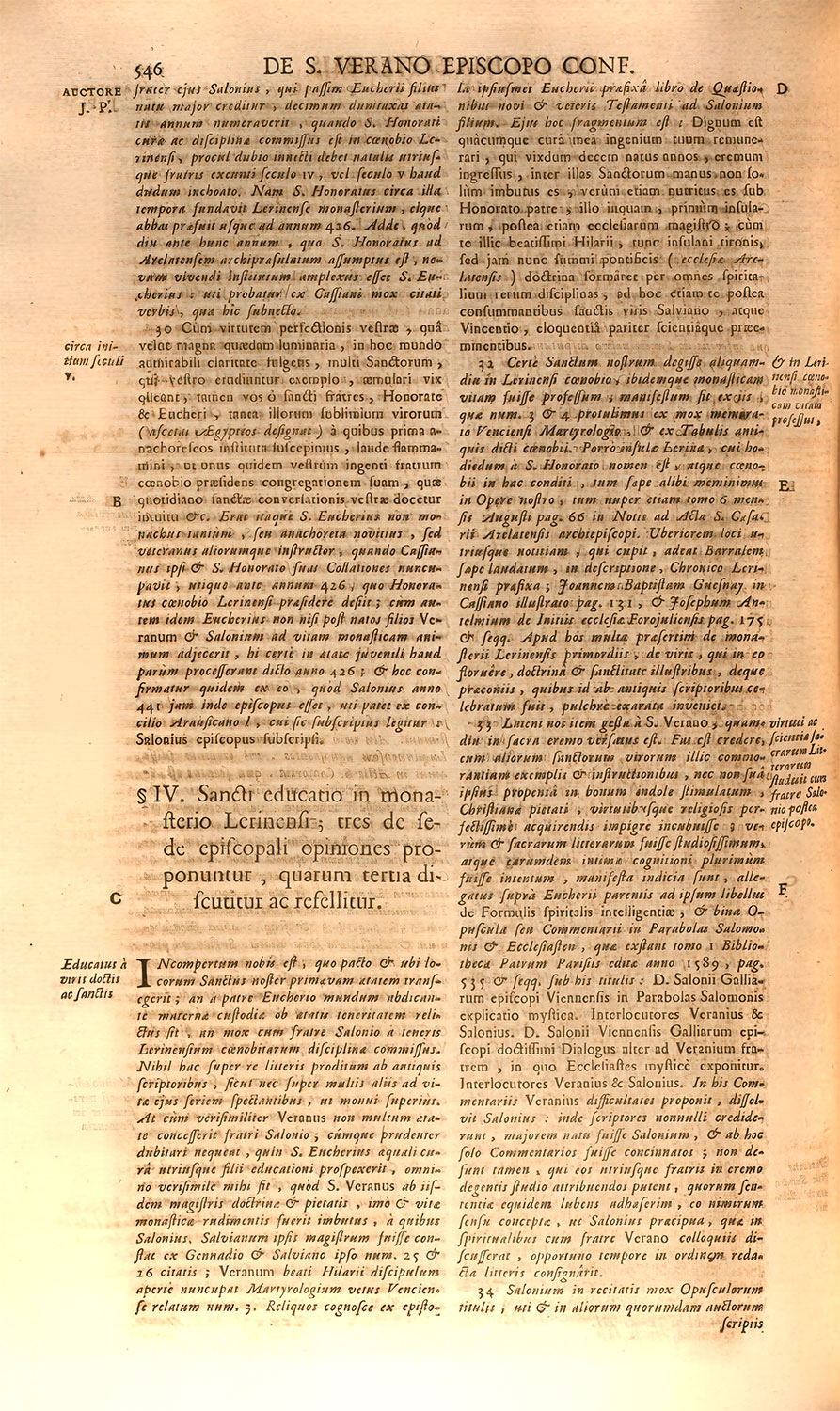
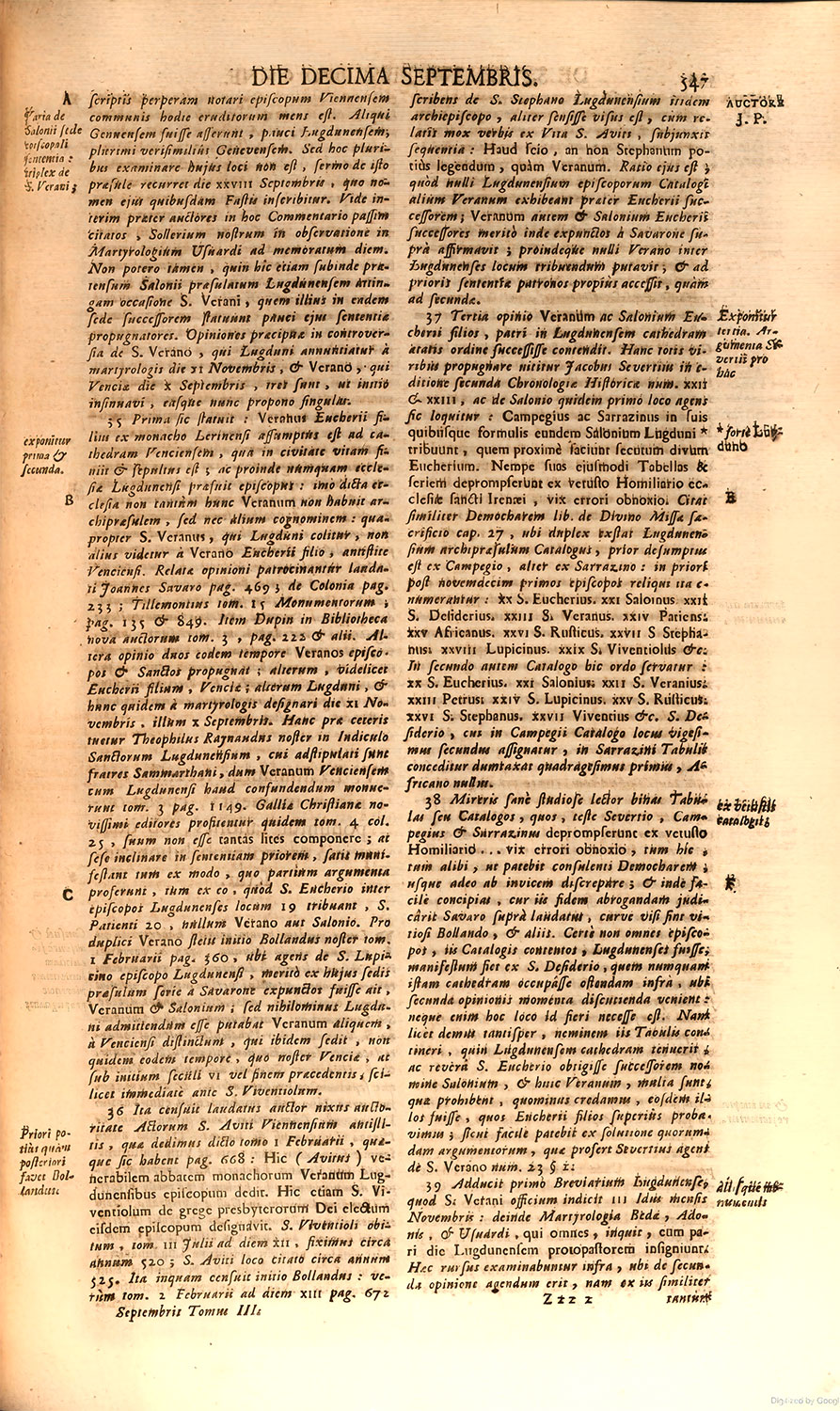
The Education of Véran and Salonius at Lérins
Périer begins his fourth section by returning to Saint Véran’s early life, particularly his education at the famous monastery of Lérins. Once again, he acknowledges how little is known with certainty. We do not know whether Véran remained in his mother Galla’s care when his father withdrew from worldly life, or whether he accompanied his brother Salonius to Lérins as a child. Nevertheless, Périer reasonably assumes that the two brothers, probably close in age, received much the same religious education. Their father, Eucherius, was deeply committed to their intellectual and spiritual development, and the evidence suggests that both benefited from the instruction of some of the most distinguished Christian scholars of their time.
The clearest account of this education comes from a letter Eucherius wrote to Salonius, which Périer quotes at length. Eucherius recalls that his son entered the monastic community when he was barely ten and was educated under Saint Honoratus, the founder of Lérins. His instruction continued under Saint Hilary, who later became Bishop of Arles, and was completed by Salvian and Vincent, both celebrated for their learning and eloquence. Périer assumes Véran received much the same instruction, supported by Salvian’s own references to teaching both brothers. The supposed ancient Martyrology of Vence also explicitly describes Véran as a disciple of Hilary, reinforcing the traditional connection between the future Bishop of Vence and the monastery.
Périer is confident that Véran spent part of his life as a monk at Lérins, though his main evidence comes from the Martyrology of Vence and the monastery’s own records. These sources establish an important tradition, but they are not equivalent to a contemporary account of Véran’s monastic life. The distinction matters because the strongest surviving fifth-century testimony concerns Salonius’s education, while some specific details attributed to Véran come only from later writers. Nevertheless, the wider picture of an aristocratic Christian family closely associated with the religious community of Lérins is well supported.
Two Brothers Discuss the Scriptures
Périer next examines an interesting aspect of the brothers’ education: their shared interest in biblical interpretation. He has already discussed the Formulae spiritalis intelligentiae, a work Eucherius wrote for Véran to help him understand Scripture’s figurative and spiritual meanings. He now introduces two additional works: commentaries on the Book of Proverbs and Ecclesiastes, published in a 1589 collection of early Christian writings. Both are attributed to Salonius and take the form of dialogues between the brothers.
These writings are particularly appealing because they let us imagine the intellectual environment in which Véran and Salonius were educated. Véran poses questions about difficult or obscure passages of Scripture, while Salonius explains them, often interpreting the biblical text in symbolic or spiritual terms. The format resembles a conversation between a student and teacher, though it would be a mistake to assume the surviving texts are literal records of discussions at Lérins. Literary dialogues were a recognized method of presenting religious instruction, and the roles assigned to the speakers may reflect the author’s chosen method of explanation rather than the circumstances in which the material originated.
Périer acknowledges that scholars had disagreed about the authorship of these works. Some regarded them as compositions by Salonius alone, perhaps because he was the elder brother and consistently provided the answers. Others believed the commentaries reflected both brothers’ contributions during their years of religious study. Périer favors the latter, suggesting that Salonius may have later organized and written down the substance of discussions he had with Véran. It is an attractive interpretation, but the literary form of the works does not establish that such conversations actually occurred.
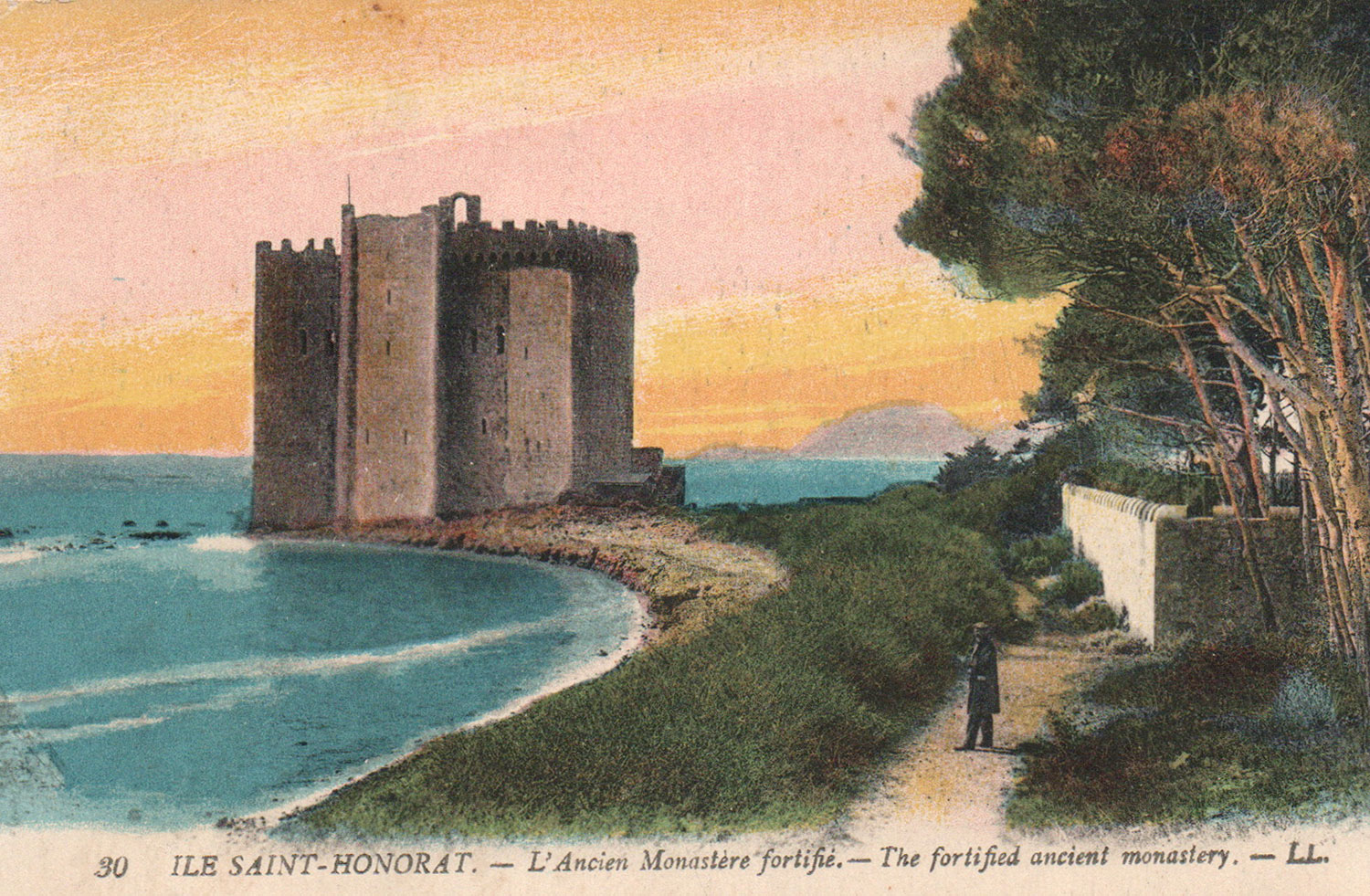
Geneva, Vienne, or Lyon?
Before addressing Véran’s episcopal career, Périer briefly discusses a related confusion surrounding Salonius. The titles of the biblical commentaries describe Salonius as Bishop of Vienne, but Périer notes that most scholars of his time rejected this attribution. A few had proposed Genoa or Lyon, but the strongest evidence pointed to Geneva. Indeed, Salonius’s presence as a bishop at the First Council of Orange in 441 provides contemporary confirmation of his episcopal status, while other historical evidence supports his association with Geneva.
The confusion over Salonius’s episcopal see matters because some early lists of the bishops of Lyon include his name, sometimes immediately after his father, Eucherius. Other lists then place a bishop named Véran after Salonius. If these lists were accurate, they would suggest that Eucherius was succeeded at Lyon by his two sons. But this raises an obvious difficulty: how could Salonius have been Bishop of Geneva and Véran Bishop of Vence if both subsequently occupied the episcopal see of Lyon? This is the problem that occupies most of the remainder of Périer’s fourth section.
Three Competing Explanations for Saint Véran’s Identity
Périer identifies three principal interpretations of the conflicting evidence. The first holds that Véran, Eucherius’s son, was educated at Lérins, became Bishop of Vence, and eventually died and was buried there. According to this interpretation, Lyon never had a bishop named Véran. The saint commemorated at Lyon on November 11 was simply Véran of Vence, whose connection with the city arose from his family background or from a tradition of local veneration. Jean Savaron, Dominique de Colonia, Tillemont, and several other historians favored this view.
The second interpretation accepts that Eucherius’s son became Bishop of Vence but maintains that another bishop named Véran lived at approximately the same time and occupied the episcopal see of Lyon. Under this explanation, the two saints were distinct individuals, commemorated on different dates and associated with different cities. Its supporters included the Jesuit scholar Théophile Raynaud and the Sainte-Marthe brothers, whose Gallia Christiana explicitly warns readers not to confuse Véran of Vence with Véran of Lyon.
The third opinion goes considerably further. According to Jacques Severt (a late 16th- and early 17th-century French theologian and ecclesiastical historian specializing in the Church of Lyon), Eucherius’s two sons succeeded their father as bishops of Lyon: first Salonius, then Véran. This would mean that the men traditionally associated with Geneva and Vence had also occupied the episcopal see of Lyon. Périer regards this explanation as the least convincing of the three and devotes the remainder of the section to examining and attempting to refute Severt’s arguments.
Interestingly, Périer also discusses Jean Bolland’s changing views. In an earlier volume of the Acta Sanctorum, Bolland had accepted the possibility that a separate Bishop Véran of Lyon existed toward the end of the fifth century or the beginning of the sixth. His interpretation was partly influenced by a passage in the Life of Saint Avitus of Vienne, which described the appointment of an abbot named Veranus as bishop for the people of Lyon. Later, however, Bolland questioned whether the name in this passage should actually be read as Stephen rather than Véran, since the episcopal lists offered no convincing place for another bishop of that name. Périer interprets this reconsideration as bringing Bolland closer to the view that Véran of Vence and the saint commemorated at Lyon were one individual.
The Conflicting Lists of the Bishops of Lyon
Severt’s principal evidence came from historical lists of the bishops of Lyon, particularly those associated with Symphorien Champier (a 16th-century French physician, humanist, and historian of Lyon) and Léonard Sarrazin (a 16th-century French historian who compiled a catalogue of the bishops of Lyon), which he believed derived from an ancient collection of sermons preserved at the Church of Saint-Irénée. In his eyes, the supposed antiquity of this source gave the lists considerable authority. Both lists include Salonius and Véran among the successors of Eucherius, apparently supporting the theory that the two brothers governed the Church of Lyon in succession.
Périer, however, immediately identifies a serious problem: the lists disagree substantially. Although both place Salonius after Eucherius and include a bishop named Véran, they differ in the order and identity of several other bishops. In one, Saint Desiderius appears relatively early, while in the other he appears much later. Another bishop, Africanus, appears in one list but is omitted from the other. Périer asks how two records supposedly derived from such a reliable ancient source could differ so significantly. His implication is clear: the lists cannot simply be accepted as accurate without closer examination.
This is a reasonable criticism, although discrepancies between medieval episcopal lists do not necessarily mean every name is fictitious. Over the centuries, scribes frequently copied, rearranged, abbreviated, and supplemented such records. A name’s presence in a list may preserve a genuine historical tradition, even when its place in the succession is uncertain. Nevertheless, Périer is justified in challenging Severt’s confidence that these particular lists prove a succession from Eucherius to Salonius and then to Véran.
Does the Evidence Really Place Véran at Lyon?
Périer next considers Severt’s other arguments, beginning with the commemoration of Saint Véran in the Breviary of Lyon (a liturgical prayer book containing the religious services and prayers used by the clergy of Lyon) and several martyrologies under November 11. These sources certainly demonstrate that a saint named Véran was associated with Lyon. Still, they do not necessarily establish that he was Eucherius’s son or that he occupied the episcopal see there. The distinction is important, and Périer promises to return to the martyrological evidence in his following section.
Severt also appeals to Gennadius’s testimony, which states that Eucherius composed explanations of Scripture for his sons Salonius and Véran, both of whom later became bishops. Severt interprets this as evidence that the brothers became successive bishops of Lyon. Périer rejects this argument, noting that Gennadius never identifies the cities where the two men exercised episcopal authority. Nothing in Gennadius’s statement requires either brother to have governed the church formerly headed by their father. Indeed, the evidence placing Salonius at Geneva makes such an interpretation particularly difficult to sustain.
To reinforce his position, Périer again quotes the supposedly ancient Martyrology of Vence, which describes Véran as a former monk of Lérins, a disciple of Hilary, and Bishop of Vence, where he was buried in a marble sarcophagus. He considers these details so distinctive that they leave no reasonable doubt about the saint’s identity. He argues that the references to Lérins, Hilary, and noble birth clearly correspond to what is known about Eucherius’s son. Consequently, he cannot accept Severt’s suggestion that the younger Véran either never became Bishop of Vence or subsequently abandoned that position to take up the episcopal see of Lyon.
However, Périer’s reasoning here deserves closer scrutiny. The Martyrology of Vence certainly preserves a tradition identifying the local saint with a fifth-century monk of Lérins, but its age and origins remain uncertain. Moreover, the passage does not explicitly identify Véran as Eucherius’s son. Périer makes that connection by comparing the biographical details with other sources. His conclusion may well be correct, but it is not quite as conclusive as he suggests. He is relying on a later account whose historical reliability has not been independently established.
Could Véran Have Been Bishop of Both Vence and Lyon?
One final possibility remains. Even if Véran had originally become Bishop of Vence, could he have been transferred to Lyon later in his career? Severt considers such a transfer entirely possible and points to the succession of Saint Nicetius (also known as Nizier), who became Bishop of Lyon after his uncle, Saint Sacerdos. He suggests that Salonius and Véran could similarly have succeeded one another, and their father, in the same episcopal see.
Périer rejects the comparison. Drawing on Gregory of Tours (a 6th-century bishop of Tours and historian of early Frankish history), he explains that Nicetius was still a priest when Sacerdos asked him to succeed him as bishop. Nicetius was therefore not transferred from one episcopal see to another. By contrast, Salonius and Véran would already have been bishops elsewhere and would therefore have had to abandon their existing dioceses to take up new appointments at Lyon. Périer also cites the ecclesiastical historian Louis Thomassin to support his argument that such transfers were unusual and subject to considerable restrictions during the early centuries of the Church.
His objection is persuasive, particularly because Severt provides no direct documentary evidence that either brother was transferred to Lyon. Nevertheless, the fact that such transfers were uncommon does not make them absolutely impossible. The strongest argument against Severt’s reconstruction is therefore not simply that bishops were rarely transferred, but that his proposed sequence of appointments depends on uncertain episcopal lists and interpretations that are not supported by contemporary testimony.
By the end of this fourth section, Périer has rejected the theory that Eucherius was succeeded at Lyon by both his sons. He remains convinced that Véran, Eucherius’s son and Salonius’s brother, was Bishop of Vence and died there. However, why the religious calendars of Lyon commemorate a bishop named Véran on November 11 remains unresolved. Périer has dealt with the most elaborate attempt to explain that apparent contradiction. Still, he has not yet fully examined the arguments for a second, distinct Bishop Véran of Lyon. His fifth section addresses that investigation.
V. Saint Véran of Vence or Saint Véran of Lyon? Examining the Conflicting Evidence
The Arguments Supporting the Second Opinion Are Examined, and the Reasons Why the First Opinion Is Considered More Probable Are Presented.
Paragraphs 42-52
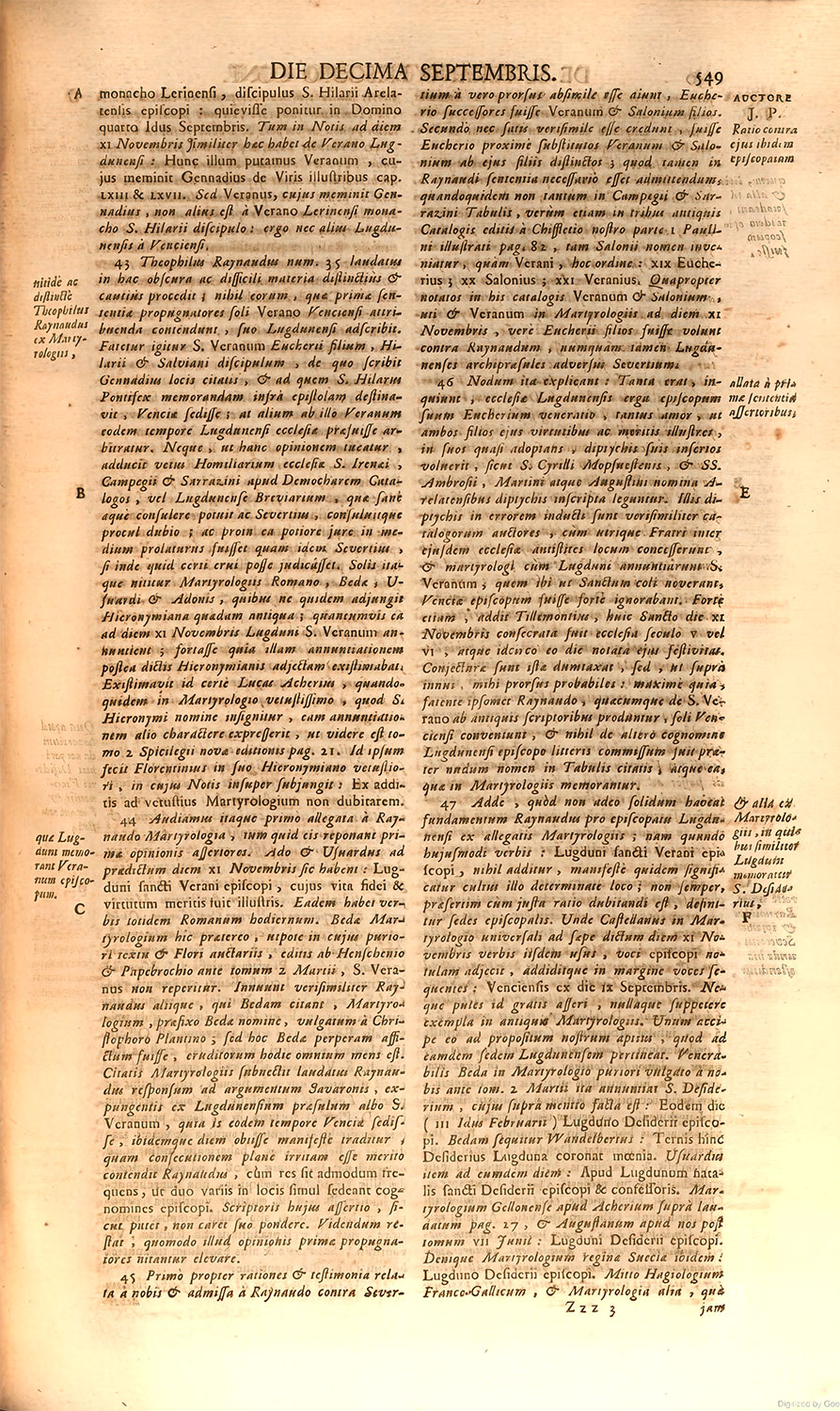
Confusion Among the Historians
Having rejected the theory that Saint Véran and his brother Salonius succeeded their father as bishops of Lyon, Périer now turns to a second interpretation: two separate fifth-century bishops named Véran, one at Vence and another at Lyon. At first glance, he admits, this view seems supported by a considerable number of respected historians. However, on closer examination, he finds that several contradict themselves, often attributing the same biographical details to individuals they insist were different people.
He begins with the Sainte-Marthe brothers, whose Gallia Christiana identifies Saint Véran as the fourth bishop of Vence, the son of Eucherius, and a disciple of Hilary and Salvian. They also record that he died and was buried at Vence, where his feast was celebrated on September 10. Yet they explicitly warn against confusing him with another Saint Véran associated with Lyon. The difficulty, as Périer observes, is that elsewhere in their work, when they discuss the supposed Véran of Lyon, they identify him with the bishop Gennadius mentions in De viris illustribus. But Gennadius’s Véran is precisely the son of Eucherius whom they have already assigned to Vence. Périer finds similar confusion in the writings of Claude Robert (a late 16th- and early 17th-century French priest and ecclesiastical historian, best known for his Gallia Christiana).
Even Cardinal Baronius, whose scholarship Périer generally respects, is not exempt from criticism. In his annotations to the Roman Martyrology under October 19, Baronius distinguishes several saints named Véran, including separate bishops of Vence and Lyon. He identifies the former as a monk of Lérins and disciple of Hilary, who reportedly died on September 10. Yet in his November 11 annotation, Baronius associates Véran of Lyon with the son of Eucherius described by Gennadius. Périer regards this as a contradiction, since he believes the evidence about Eucherius’s son, his education at Lérins, and his association with Hilary all points to the same individual: the Bishop of Vence.
This is a particularly revealing example of how easily historical confusion can perpetuate itself. Once two saints with the same name are established in religious calendars and episcopal lists, later writers may accept their separate identities even when the biographical evidence describing them overlaps. Périer is justified in highlighting these inconsistencies. Nevertheless, showing that earlier historians confused two individuals does not necessarily prove that only one individual existed. That requires a separate examination of the evidence for the supposed Bishop of Lyon.
Théophile Raynaud and the Evidence of the Martyrologies
Périer considers the Jesuit scholar Théophile Raynaud a more careful defender of the two-Véran theory. Unlike some of his predecessors, Raynaud does not attribute the same life story to both saints. He accepts that Eucherius’s son, educated at Lérins under Hilary and Salvian, became Bishop of Vence. However, he maintains that another bishop of the same name occupied the episcopal see of Lyon and was commemorated there on November 11.
Interestingly, Raynaud does not rely primarily on the episcopal lists examined in the preceding section. Instead, he appeals to the religious calendars, particularly the martyrologies attributed to Bede, Ado, and Usuard, together with the Roman Martyrology. Périer suggests this choice may reflect Raynaud’s lack of confidence in the conflicting episcopal lists, though he cannot establish Raynaud’s reasons for omitting them.
Périer also questions the antiquity of some martyrological references. He observes that the November 11 entry for Véran does not appear in the more authentic text of Bede’s Martyrology or in the additions attributed to Florus. Christopher Plantin published a work under Bede’s name, on which some earlier writers relied, but it was incorrectly attributed to Bede. Périer likewise notes that certain editors of the Martyrology traditionally associated with Saint Jerome regarded its reference to Véran of Lyon as a later addition rather than part of the original text.
These observations matter because the apparent antiquity of a martyrology can lend its contents considerable historical authority. A reference copied into an ancient collection centuries after its original composition cannot automatically be treated as contemporary evidence. Périer is therefore concerned not only with what the martyrologies say, but also with how their texts developed and whether particular entries genuinely belong to their earliest versions.
Raynaud’s strongest argument remains straightforward: the fact that Véran was Bishop of Vence does not make it impossible for another man of the same name to have been Bishop of Lyon at approximately the same time. Périer readily acknowledges the force of this objection. Two bishops with identical names could certainly have governed different dioceses simultaneously. The real question is whether sufficient evidence exists to establish that this actually happened.
Why Would Lyon Commemorate the Bishop of Vence?
Périer’s preferred explanation begins with the exceptionally high reputation enjoyed by Saint Eucherius, Bishop of Lyon. He suggests that the Church of Lyon may have continued to honor not only Eucherius himself but also his two sons, Salonius and Véran, both of whom became distinguished bishops elsewhere. Their names could therefore have appeared in the city’s ecclesiastical records, even though neither held its episcopal see.
The ancient diptychs, lists of individuals commemorated during religious services, are particularly important. These could include saints, bishops, benefactors, and other distinguished members of the Christian community. Périer suggests that Eucherius’s sons’ names may have originally appeared in such records as honored figures associated with Lyon. Later compilers, encountering their names without fully understanding the context, could have mistaken them for successive bishops of the city. In this way, an innocent act of commemoration might eventually have produced an incorrect episcopal succession.
Périer notes that similar practices existed elsewhere, citing the inclusion of distinguished Christian figures in the diptychs of Arles, even though they had not governed that particular church. Tillemont proposed another explanation: perhaps a church in Lyon was dedicated to Saint Véran in the fifth or sixth century, giving rise to a local feast on November 11. Such a commemoration could subsequently have entered the martyrologies without necessarily indicating that Véran had been bishop there.
These explanations are plausible, but Périer acknowledges that they remain conjectural. He cannot demonstrate that the names of Véran and Salonius entered Lyon’s episcopal lists through a misunderstanding of the diptychs, nor can he identify an ancient church dedicated to Véran that would explain the November 11 commemoration. Nevertheless, his argument raises an important historical possibility: a saint could become closely associated with a city through family connections, religious devotion, or local tradition without ever having held ecclesiastical office there.
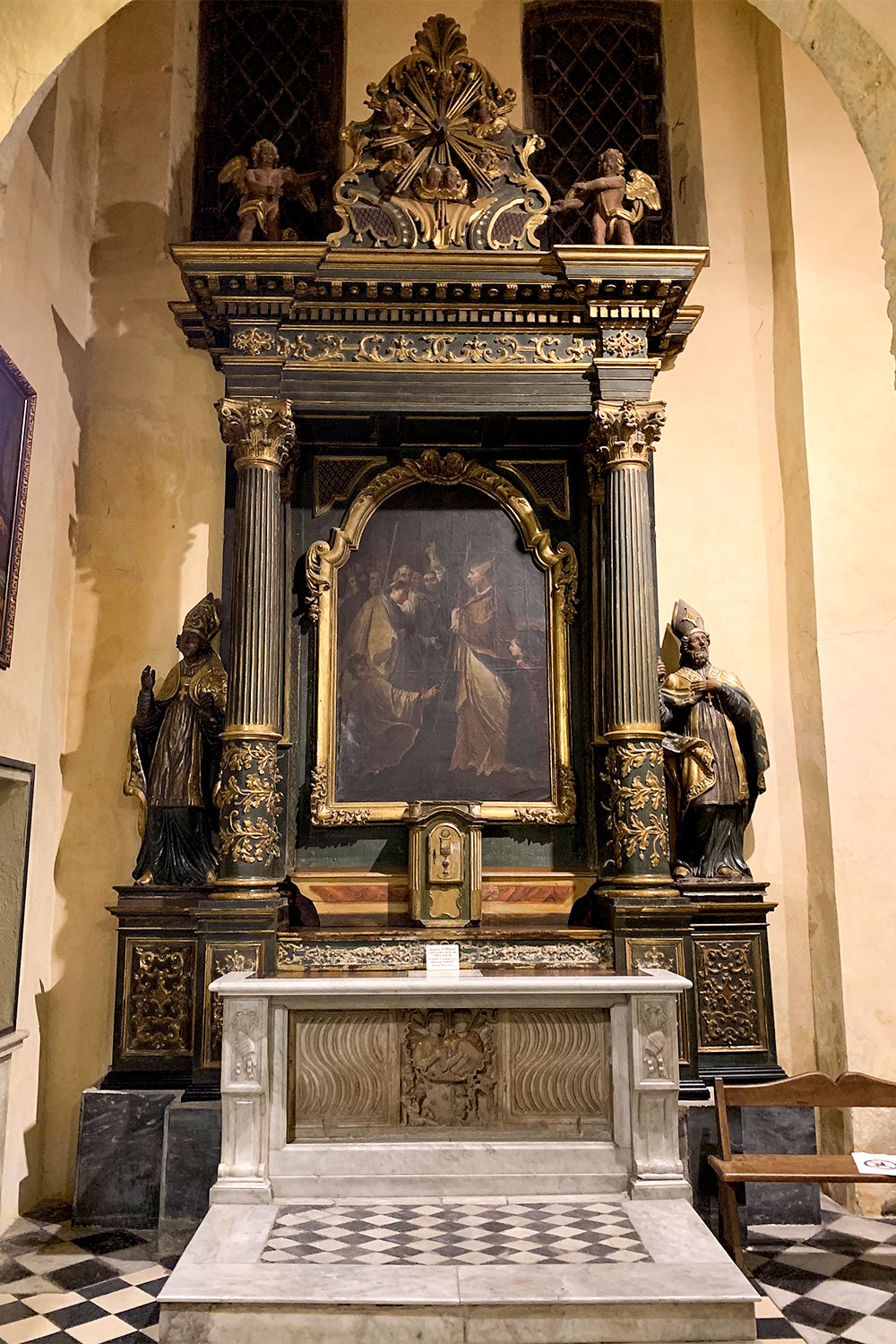
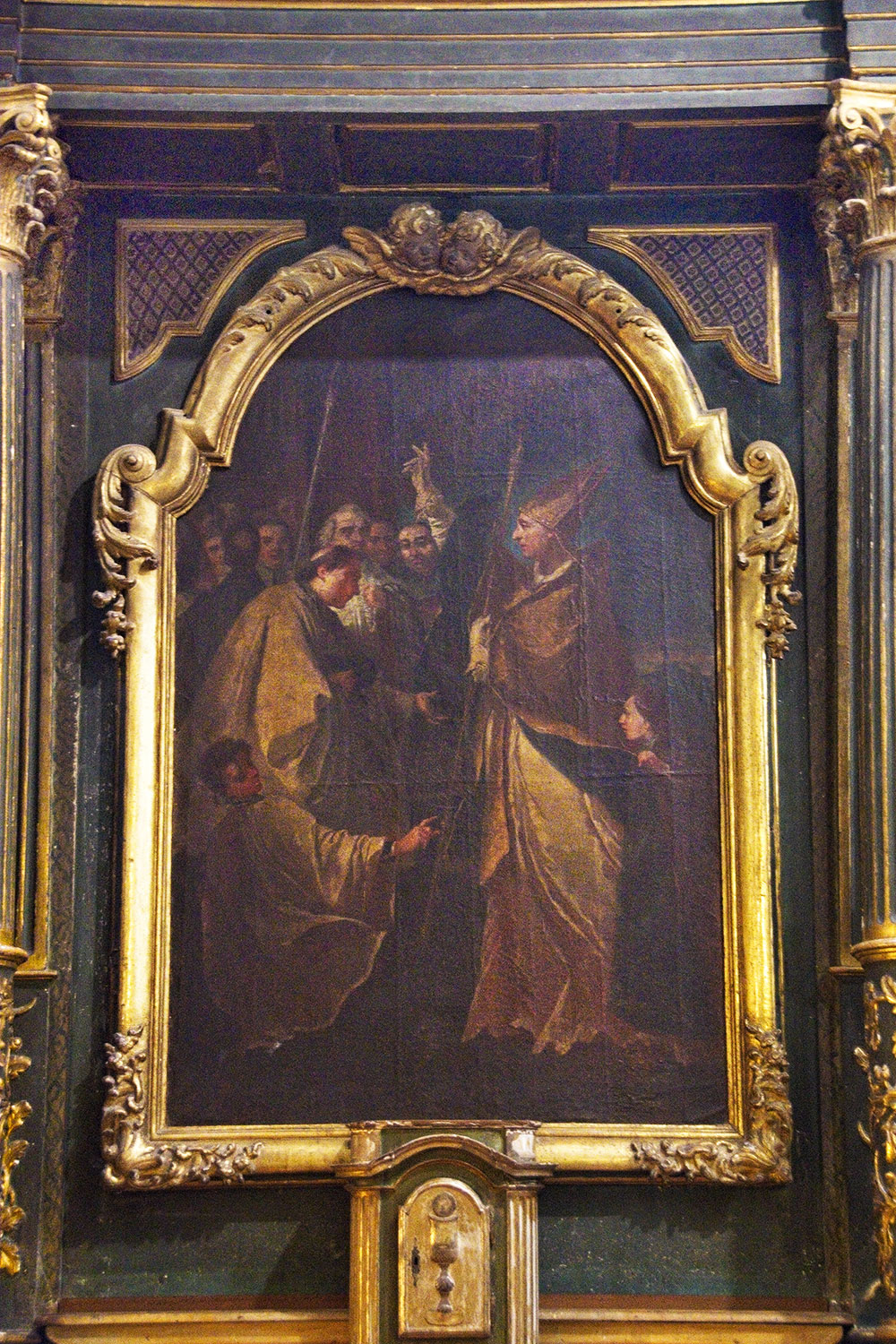
Does “At Lyon” Really Mean “Bishop of Lyon”?
Périer next examines the wording of the martyrologies themselves. Ado and Usuard, followed by the Roman Martyrology, commemorate Véran on November 11 with an entry describing him as a bishop whose life was distinguished by faith and virtue. The entry begins with the geographical designation “At Lyon.” Raynaud interprets this as evidence that Véran governed the Church of Lyon, but Périer questions whether that conclusion is justified.
His objection is subtle but important. A martyrology generally identifies the place where a saint was commemorated, associated with a particular church, or believed to have been buried. The geographical designation does not necessarily establish where a bishop exercised his episcopal authority. Périer points out that Chastelain, in his Martyrologe Universel, reproduces the November 11 commemoration at Lyon but adds a marginal note identifying Véran as Bishop of Vence and referring readers to his September 9 entry.
An interesting example of this distinction appears much closer to home, in the history of Saint Lambert, Vence’s other patron saint. Lambert was born in Bauduen, a village in the Var, traditionally in 1084, but served as Bishop of Vence from 1114 until he died in 1154. Nevertheless, he is also the patron saint of Bauduen, where he continues to be commemorated with religious celebrations on May 26 and September 13. A chapel is dedicated to him, and one of his relics is preserved in the village church. No one would suggest that Lambert was Bishop of Bauduen simply because he is venerated there. His association with the village derives from his birth, just as Saint Véran’s association with Lyon might have stemmed from family connections rather than an episcopate in that city. Although this does not prove Périer’s interpretation, it illustrates the distinction he is making.
To demonstrate the wider problem, Périer introduces the example of Saint Desiderius, also known as Didier, Bishop of Vienne. Several medieval martyrologies commemorate a bishop named Desiderius at Lyon under February 11. Yet the well-documented Saint Desiderius of Vienne was a martyr who died in 608 and whose principal feast was celebrated on May 23. Périer notes that historical accounts describe his remains being transferred to Vienne some years after his death. He also points to references to another Desiderius in Lyon’s episcopal lists and religious traditions.
Périer deliberately explores how these conflicting references could be used to construct a theory that two different bishops named Desiderius existed: one at Lyon in the fifth century and another at Vienne in the seventh. A sufficiently determined historian, he suggests, might devise explanations for the apparent contradictions and attribute different traditions to the two individuals. Yet this would not necessarily make the theory correct. His purpose is to show how easily an uncertain geographical reference, combined with an unreliable episcopal list, can produce the supposed existence of a second saint.
The example becomes even more revealing when Périer examines Jacques Severt’s treatment of the evidence. Severt had confidently accepted the episcopal lists when they supported his argument that Véran and Salonius governed Lyon. Yet he rejected the same lists when they placed Desiderius among the city’s bishops, arguing that the entry was erroneous. Périer regards this as an inconsistency. If the lists can be mistaken about Desiderius, why should we accept their references to Véran and Salonius without question?
Périer’s distinction remains valuable today. A saint’s presence in a religious calendar, even with the title of bishop, is not always enough to identify the diocese he presided over. Additional evidence is needed, especially when sources conflict.
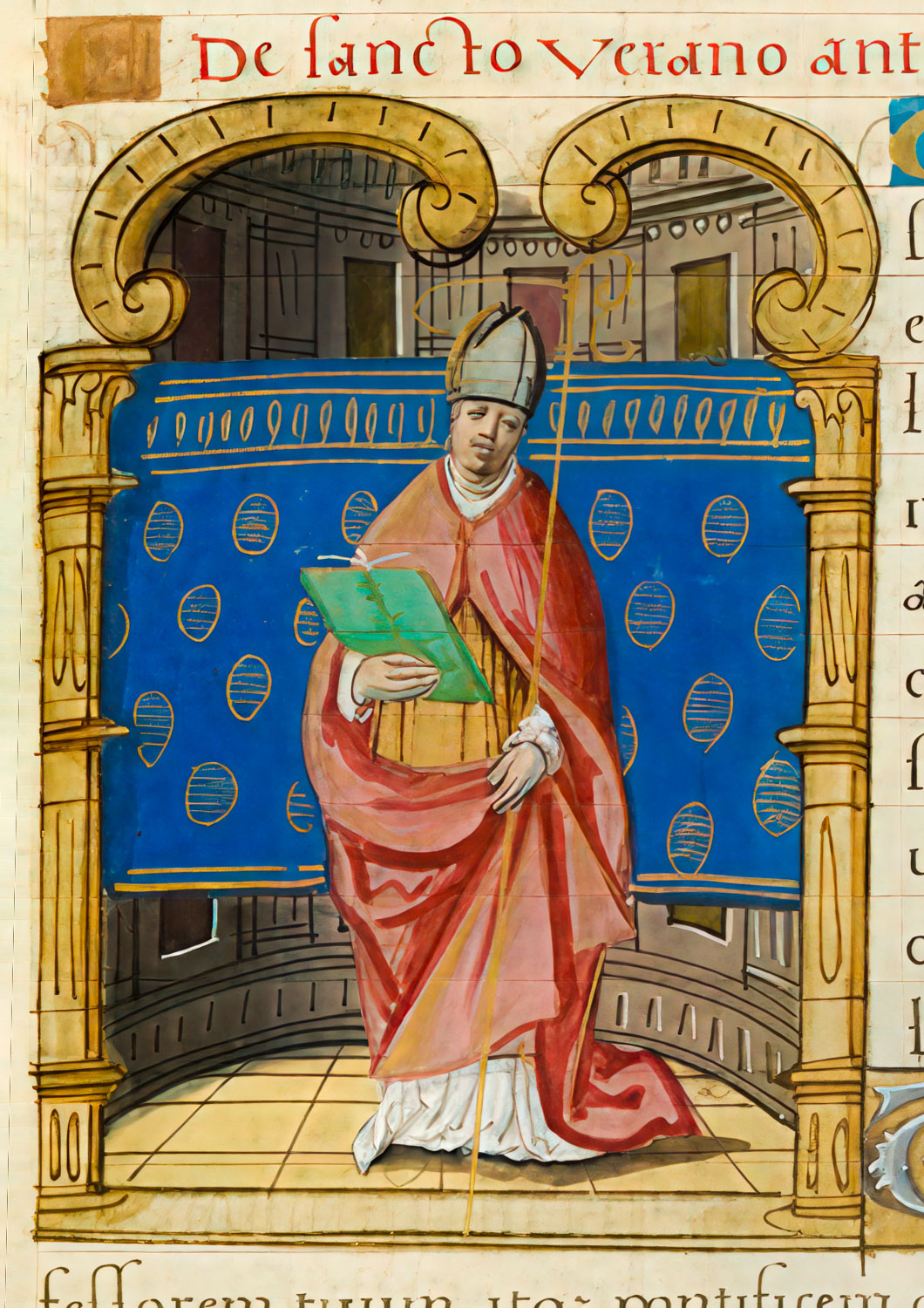
The Mysterious Relics at Saint-Nizier in Lyon
One of the most intriguing passages in the investigation concerns the Church of Saint-Nizier in Lyon, a religious establishment long associated with the city’s early bishops and martyrs. Périer examines a 1337 charter issued by Guillaume de Sura, Archbishop of Lyon, which Severt reproduced as further proof that Saint Véran had occupied the episcopal see of Lyon.
The charter lists the bodies and relics of numerous saints believed to be preserved in the church. Among them are the Forty-Eight Martyrs of Lyon and several confessors, including Barbarinus, Viventiolus, Genesius, Aurelianus, Rusticus, Cicarius, Desiderius, Véran, and Nicetius. It also grants indulgences to the faithful who visit the church on these saints’ feast days, referring to several of them collectively as former holy bishops of Lyon. For Severt, including Véran provided convincing documentary evidence that he had governed the city.
Périer, however, identifies another inconsistency. The same charter lists Desiderius and Barbarinus among the supposed bishops of Lyon, although Severt does not accept either man as having held that see. If the charter is authoritative when it describes Véran as a bishop of Lyon, Périer asks, why should it reject similar claims about the others? Once again, he accuses Severt of selectively accepting evidence.
The relics themselves present an additional difficulty. The charter suggests that Véran’s body was preserved at Saint-Nizier, whereas Vence traditions consistently place his burial in Vence Cathedral. Severt also reports that an examination of the relics at Saint-Nizier had taken place in 1308. The bishop appointed to conduct the inspection reportedly failed to find the bodies of four particularly ancient saints, including Eucherius, Salonius, Véran, and Pothinus. However, he did identify the remains of several later bishops.
A longstanding tradition also celebrated Saint Véran at Saint-Nizier. Severt explains that the church observed his feast the day after November 11 because that date was already taken by the important celebration of Saint Martin of Tours. The custom reflected the belief that Véran’s relics, along with those of his father and brother, had been preserved in the church.
Périer finds the tradition unconvincing. He believes Eucherius’s son was buried at Vence and therefore rejects the suggestion that his body was also preserved at Lyon. The 1308 examination’s failure to locate the remains seems to reinforce his skepticism. He concludes that the claims concerning Véran’s burial and episcopate at Lyon are based on unreliable traditions.
The evidence is certainly problematic, but it deserves careful interpretation. The absence of identifiable remains during a medieval inspection does not necessarily prove they were never present, since relics could have been moved, lost, or misidentified over the centuries. Likewise, the local tradition at Saint-Nizier shows that a saint named Véran was venerated there, but it does not independently establish his episcopal career. What emerges most clearly is that Lyon possessed its own religious traditions concerning Véran, whose relationship with the better-documented cult at Vence remained uncertain.
Périer Reaches His Verdict
After examining the arguments and documents at considerable length, Périer finally announces his conclusion. He has already rejected the third theory, proposed by Jacques Severt, that Salonius and Véran succeeded their father as bishops of Lyon. The second theory, defended by Théophile Raynaud, holds that two distinct fifth-century bishops were named Véran. Périer admits this interpretation has merit, but finds the surrounding difficulties too substantial to overcome.
He therefore adopts the first theory: that Saint Véran of Vence and the Saint Véran commemorated at Lyon were the same individual, the son of Eucherius and brother of Salonius. According to this interpretation, Véran was educated at Lérins, became Bishop of Vence, and eventually died and was buried there. His commemoration at Lyon arose from the city’s religious association with Eucherius and his family, rather than from a separate episcopate.
Périer’s conclusion is persuasive in several respects. He has demonstrated serious weaknesses in the arguments of those who distinguish the two saints, particularly their inconsistent use of historical sources and their reliance on episcopal lists whose accuracy is doubtful. He has also shown that some of the supposed evidence for a Bishop Véran of Lyon could be explained by later confusion in religious calendars and local traditions.
Nevertheless, an important uncertainty remains. Périer’s preferred explanation depends partly on conjecture, particularly concerning the origins of the Lyon commemoration and the supposed errors in its episcopal lists. His argument that Véran, Eucherius’s son, was Bishop of Vence also relies heavily on the traditions preserved in the Martyrology of Vence, whose age and origins have not been securely established. The shortcomings of the opposing theories do not, by themselves, prove that Périer’s interpretation is correct.
To his credit, Périer does not claim that the matter is settled beyond all possible doubt. He invites anyone dissatisfied with his arguments to produce more reliable evidence, adding that he would have no difficulty reconsidering his conclusion. Indeed, he expects to return to a similar problem later that same month when examining the life of Salonius.
For our purposes, the most important result of this section is not that Périer has definitively solved the mystery of Saint Véran’s identity, but that he has exposed how uncertain much of the historical evidence really is. Early Christian writings support the existence of a fifth-century Véran, son of Eucherius and brother of Salonius. The traditions connecting him with Vence are substantial, and the religious commemoration of a Véran at Lyon is equally well attested. Whether those traditions originally concerned one man or two remains a question that cannot be resolved simply by counting the number of entries in episcopal lists or religious calendars.
Having reached his preferred conclusion, Périer turns in his final section to a different, potentially more reliable, form of evidence: surviving correspondence involving Popes Leo the Great and Hilarius. These letters provide direct evidence that a fifth-century bishop named Véran participated in important ecclesiastical affairs, bringing the investigation much closer to the historical events themselves.
VI. Saint Véran and the Popes: Correspondence, Ecclesiastical Disputes, and the Mystery of His Death
Correspondence with Pope Leo. Disputes Arising Among Certain Bishops of Gaul Are Entrusted to Him by Hilary, Leo’s Successor. The Year of His Death Is Uncertain.
Paragraphs 53-59
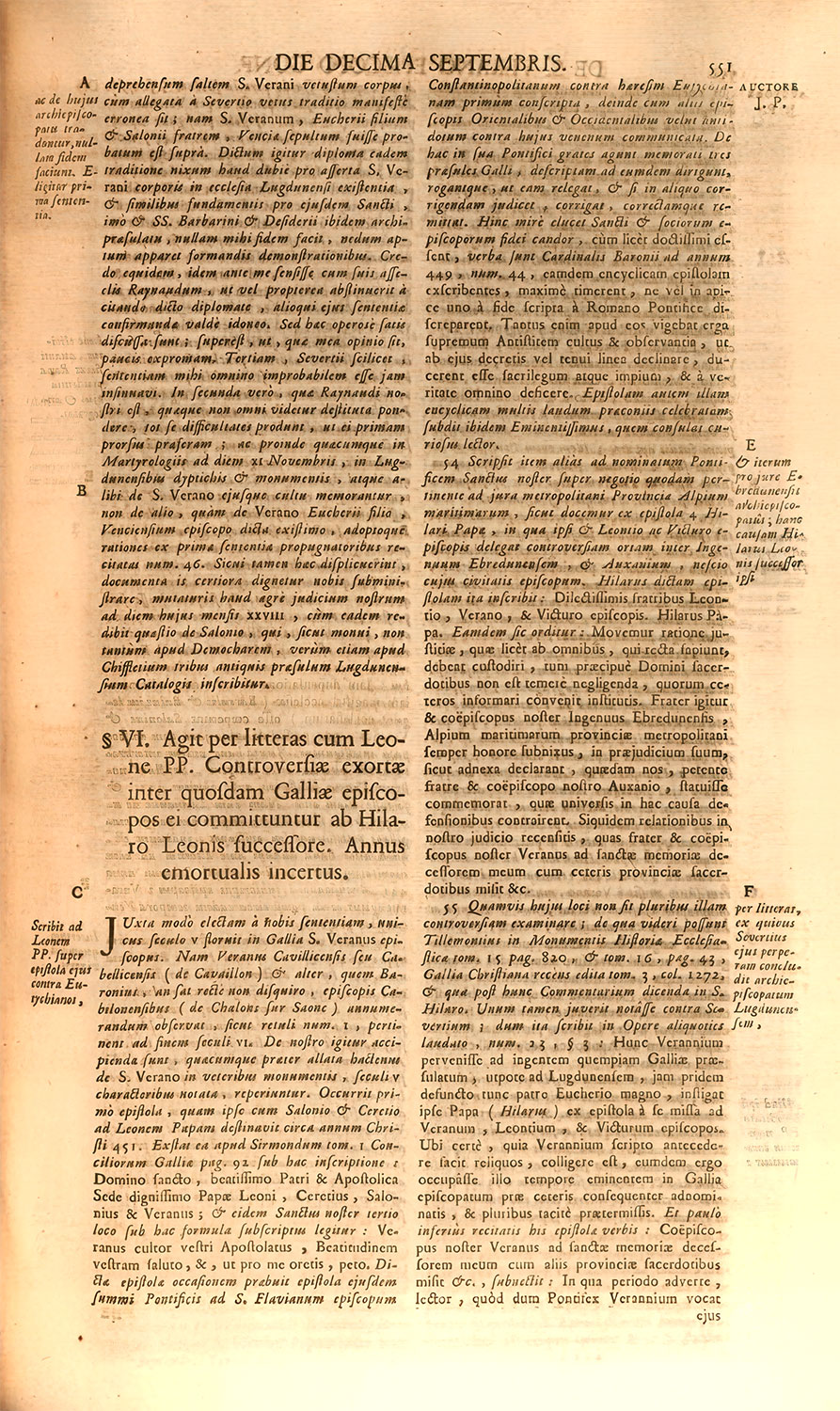
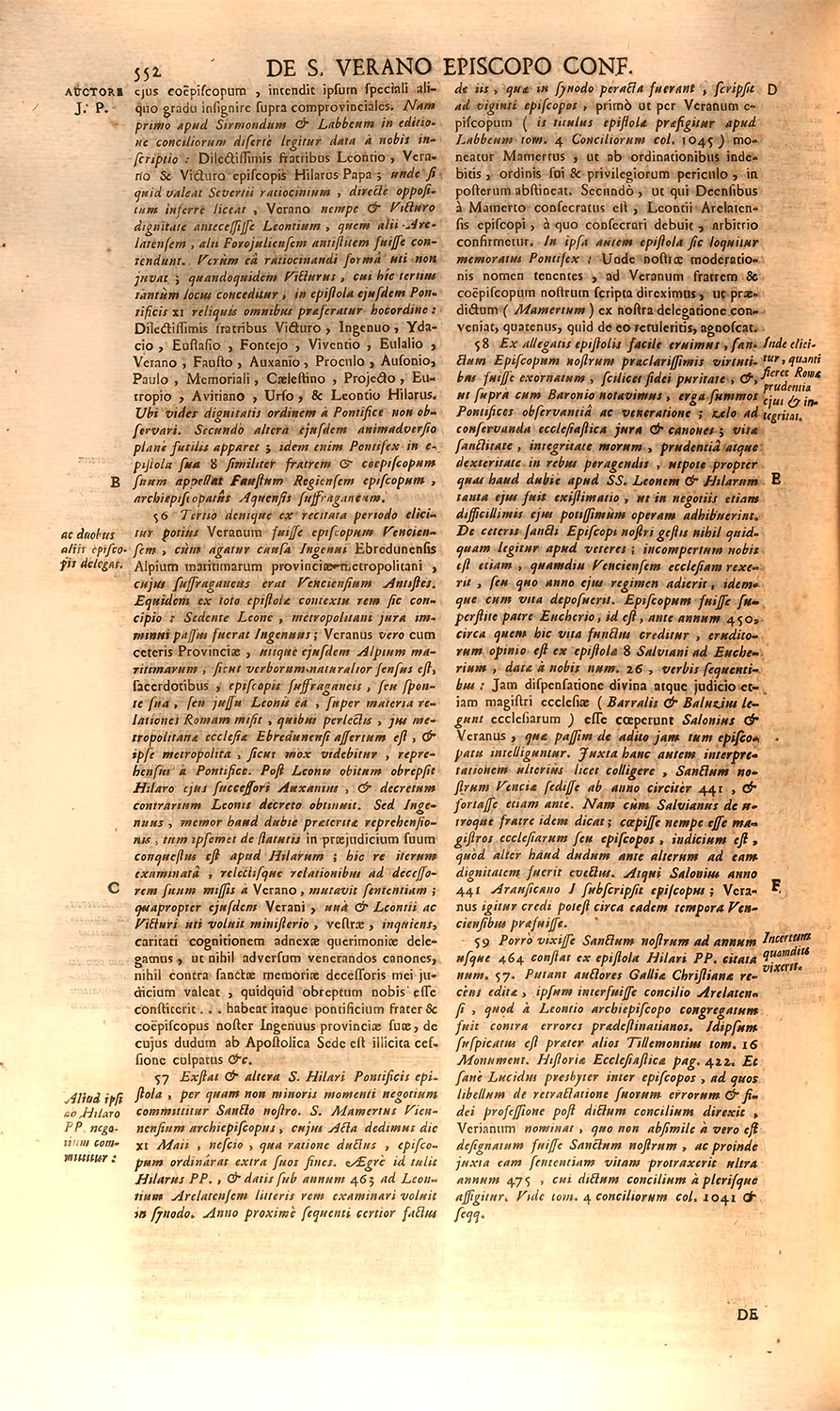
Saint Véran Writes to Pope Leo the Great
Having concluded that Saint Véran of Vence and the saint commemorated at Lyon were the same person, Périer turns to some of the most historically significant evidence in his investigation: surviving correspondence involving two fifth-century popes. Unlike the medieval religious calendars and later biographies examined in previous sections, these letters date to Véran’s lifetime. They provide a rare opportunity to observe a bishop named Véran participating in the important religious and administrative affairs of his age.
The first document is a letter addressed to Pope Leo the Great by three bishops of Gaul: Ceretius, generally identified as Bishop of Grenoble; Salonius, Bishop of Geneva; and Véran himself. Périer dates the letter to about 451, though its precise date remains uncertain. It concerns Pope Leo’s celebrated Tome to Flavian, written in 449 to Flavian, Patriarch of Constantinople, during the controversy over the teachings of Eutyches. At the heart of the dispute was the relationship between Christ’s divine and human natures, a question that had provoked serious divisions within the Church. Leo’s letter became one of the period’s most influential theological documents and played an important role in the debates surrounding the Council of Chalcedon in 451.
The three bishops obtained a copy of Leo’s letter and were so impressed by its contents that they sent their thanks to Rome. They also made an interesting request. Having carefully copied the document, they asked the Pope to examine their transcription, correct any mistakes, and return it so that accurate copies could be distributed among the bishops and other Christians of Gaul. In an age when scribes copied every manuscript by hand, even a small transcription error could alter the meaning of an important theological statement. Their concern for accuracy offers a fascinating glimpse into how religious texts were transmitted in the fifth century.
Périer reproduces Véran’s signature, in which the bishop respectfully greets the Pope and asks for his prayers. He also quotes Cardinal Baronius, who praised the three bishops for their devotion to the Roman Church and their determination to preserve Leo’s teaching without alteration. Although Périer interprets the correspondence primarily as evidence of their religious orthodoxy, it is equally valuable from a historical perspective. The letter places a bishop named Véran in direct correspondence with one of the most influential figures in early Christianity, alongside Salonius. However, it does not explicitly identify the episcopal see Véran occupied. Périer assumes this was Vence, consistent with his earlier conclusion, but the letter itself does not settle that question.
A Dispute Over Nice, Cimiez, and the Authority of Embrun
Périer next introduces a series of letters involving Pope Hilarius, who succeeded Leo in 461. These concern disputes over ecclesiastical authority in southern Gaul, particularly the rights of Ingenuus, Bishop of Embrun and metropolitan of the province of the Maritime Alps. The matter had already been considered during Leo’s pontificate, when Véran and other bishops of the province submitted reports to Rome. After Leo’s death, however, another bishop named Auxanius obtained a decision from Hilarius that apparently conflicted with the earlier ruling. Ingenuus protested, and Hilarius agreed to reconsider.
The Pope’s surviving letter is addressed to three bishops, Leontius, Véran, and Victurus, whom he appoints to investigate the complaint. Hilarius explains that the reports Véran and his fellow bishops previously submitted, along with the decision issued by Pope Leo, must be carefully examined. He is particularly concerned that deception or the ambitions of individual bishops should not alter ecclesiastical rights. For Périer, Véran’s entrustment with such a responsibility demonstrates the confidence the papacy placed in him.
However, the complete papal letter contains an especially interesting detail that Périer does not explore. The controversy explicitly concerns the ancient episcopal communities of Nice and Cimiez. These neighboring settlements had once possessed separate bishops, despite their close geographical relationship. The papal correspondence makes clear that their ecclesiastical administration had become a source of disagreement, with conflicting claims over the metropolitan bishop of Embrun’s authority. Hilarius insists that Nice and Cimiez should not be divided between two bishops but should return to a single bishop, in accordance with his predecessor’s decision.
This is particularly relevant to Vence’s history, whose bishop was a suffragan of the metropolitan see of Embrun. It also helps explain why Véran might have become involved in a controversy concerning two neighboring episcopal communities. Périer makes this argument, observing that Véran’s participation in the dispute is more readily explained if he was Bishop of Vence than if he occupied the episcopal see of Lyon. The geographical and administrative connections certainly make this interpretation plausible, although the letter does not explicitly identify Véran as Bishop of Vence.
Did the Order of the Bishops’ Names Indicate Their Importance?
Périer takes the opportunity to challenge another argument Jacques Severt advances to support the supposed episcopate of Véran at Lyon. Severt observed that Pope Hilarius placed Véran ahead of certain other bishops in his correspondence and interpreted this as evidence that Véran held a particularly important episcopal see. Since Lyon was one of Gaul’s most distinguished churches, Severt saw this as consistent with the theory that Véran had succeeded his father, Eucherius, there.
Périer has little difficulty exposing this argument’s weakness. He observes that the surviving editions of the papal letter place Leontius before Véran, which, if Severt’s reasoning were correct, would suggest that Leontius held the higher rank. More importantly, the order of names changes in other letters. In one document, Victurus appears before Véran, while in another he is listed among a much larger group of bishops in an entirely different position. Périer therefore concludes that the arrangement of names cannot reliably establish the relative importance of their episcopal sees.
He is equally dismissive of Severt’s suggestion that the Pope’s description of Véran as his brother and fellow bishop implies some exceptional status. This was a normal form of address used in papal correspondence with bishops of varying rank, including those who governed relatively modest dioceses. There is no reason to interpret it as proof that Véran was Archbishop of Lyon.
These objections are convincing. While a name’s position in an official document can occasionally reflect seniority or precedence, it cannot automatically be interpreted that way without understanding the writer’s conventions. The papal letters establish that Véran enjoyed sufficient standing to participate in important ecclesiastical affairs. Still, they do not identify his diocese through either the order of his name or the courtesy titles used to address him.
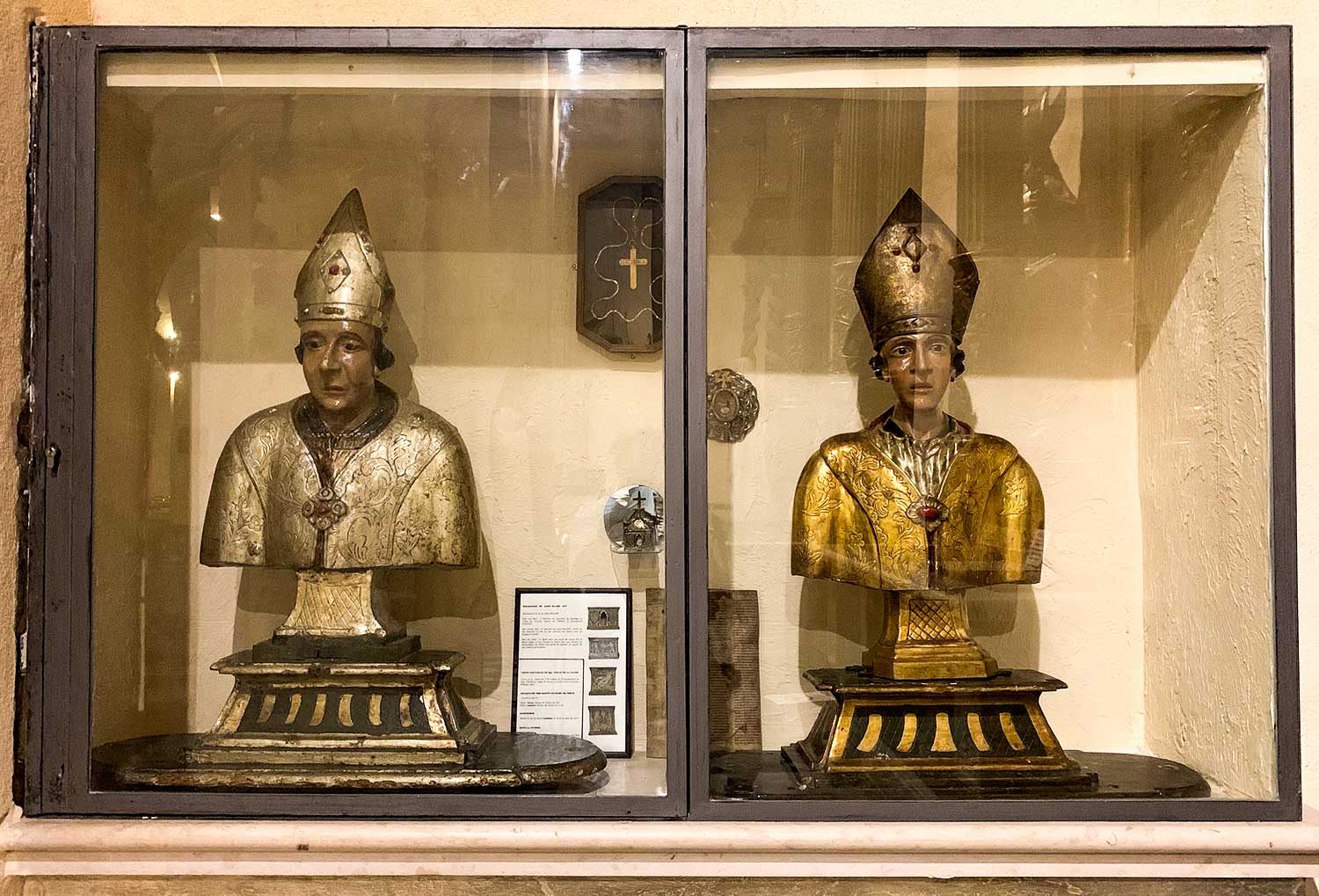
Pope Hilarius Entrusts Véran with Another Difficult Mission
The next episode offers perhaps the strongest evidence of the papacy’s confidence in Véran. It concerns Saint Mamertus, Bishop of Vienne, who had consecrated a bishop for the city of Die without the authorization of the ecclesiastical authority entitled to make that appointment. The consecration put Mamertus in conflict with Leontius, Bishop of Arles, whose metropolitan rights were affected.
Pope Hilarius took the matter seriously. After receiving complaints and arranging for the affair to be examined by a gathering of bishops, he issued a letter dated February 25, 464, outlining the measures to be taken. Mamertus was to be warned against making further unauthorized episcopal appointments, and Leontius, who should have performed the consecration in the first place, was to confirm the bishop Mamertus had consecrated at Die. Although the Pope considered Mamertus’s actions a serious breach of ecclesiastical discipline, he favored a measured response rather than immediate deposition.
Significantly, Hilarius entrusted Véran with delivering the warning to Mamertus. The surviving papal letter states that the Pope sent written instructions to Véran, authorizing him to approach the bishop of Vienne on the Pope’s behalf. Those separate instructions do not appear to have survived, but their existence and purpose are explicitly recorded in the letter addressed to the assembled bishops.
This was no trivial assignment. Mamertus was the bishop of an important city, and the dispute involved competing claims of metropolitan authority that had troubled the churches of southern Gaul for some time. In such circumstances, delivering a papal warning required considerable tact and a clear understanding of ecclesiastical law. Périer interprets the appointment as evidence of Véran’s prudence, integrity, and reputation for sound judgment.
Although the surviving document does not say whether Véran personally carried out the mission or how Mamertus responded, it strongly suggests the Pope trusted him with a sensitive administrative responsibility. It also establishes that a bishop named Véran was still active in 464, more than twenty years after the First Council of Orange in 441.
When Did Saint Véran Become Bishop, and When Did He Die?
As Périer concludes his commentary, he returns to two questions that have remained unresolved throughout his investigation: when did Véran become Bishop of Vence, and when did he die? Despite the considerable body of evidence he has assembled, he acknowledges that neither date can be established with certainty.
Regarding the start of Véran’s episcopate, Périer returns to the letter Salvian wrote to Eucherius, which he reproduced earlier in his commentary. Salvian praises the education of Eucherius’s sons and remarks that, through divine providence, they had already begun to become teachers of the Church. Périer interprets these words as indicating that Véran and Salonius had both attained episcopal office while their father was still alive. Since Salonius was already Bishop of Geneva when he attended the First Council of Orange in 441, Périer suggests that Véran may have become Bishop of Vence at approximately the same time, perhaps even earlier.
This is a reasonable possibility, but the evidence does not make it certain. The expression Salvian uses could describe the brothers’ growing responsibilities as Christian teachers without necessarily proving that both had already become bishops. The surviving records of the Council of Orange also contain an intriguing detail. One attendance list names a deacon called Veranus accompanying Eucherius, Bishop of Lyon. If this were the same Véran who later became Bishop of Vence, he would still have been a deacon in 441, rather than a bishop. The identification cannot be proved, but it illustrates why Périer’s proposed date for the beginning of the episcopate should be treated cautiously.
Véran’s death date is equally uncertain. Pope Hilarius’s correspondence confirms that a bishop named Véran was still alive in 464. Périer then introduces another possible reference from a considerably later event, a council held at Arles under Archbishop Leontius to examine the teachings of a priest named Lucidus. The controversy concerned predestination, divine grace, and human free will, questions that had provoked considerable theological disagreement in the Western Church. Following the council, Lucidus issued a statement withdrawing his disputed opinions and affirming his acceptance of the Church’s teaching.
Among the bishops addressed in this document appears a man named Verianus. Périer thinks this may have been Saint Véran of Vence. Since the council is generally dated to around 475, such an identification would mean that Véran lived at least until that year, considerably later than some earlier reconstructions of his life suggested. However, the document does not identify Verianus’s episcopal see, and the council’s date has been the subject of historical discussion. The identification therefore remains uncertain.
With that, Périer brings his lengthy investigation to an end. After examining the religious calendars, the ancient traditions of Vence, the monastery of Lérins, Véran’s family relationships, the conflicting episcopal lists of Lyon, and the surviving correspondence of two popes, he is still unable to determine precisely when the saint was born, when he became bishop, or when he died.
Yet the investigation has yielded results. Périer has assembled substantial evidence concerning a fifth-century bishop named Véran who participated in important theological discussions and was entrusted with delicate ecclesiastical responsibilities. He has also presented a carefully argued, though not conclusive, case for identifying this bishop with Eucherius’s son and with the Saint Véran venerated at Vence.
Perhaps the most valuable aspect of his work is that he preserved the evidence and arguments of numerous earlier historians, allowing later generations to revisit questions he could not finally resolve. More than 275 years after his commentary was published, the historical identity of Saint Véran still presents difficulties. Still, thanks in considerable part to the Bollandists, we are in a much better position to understand why.