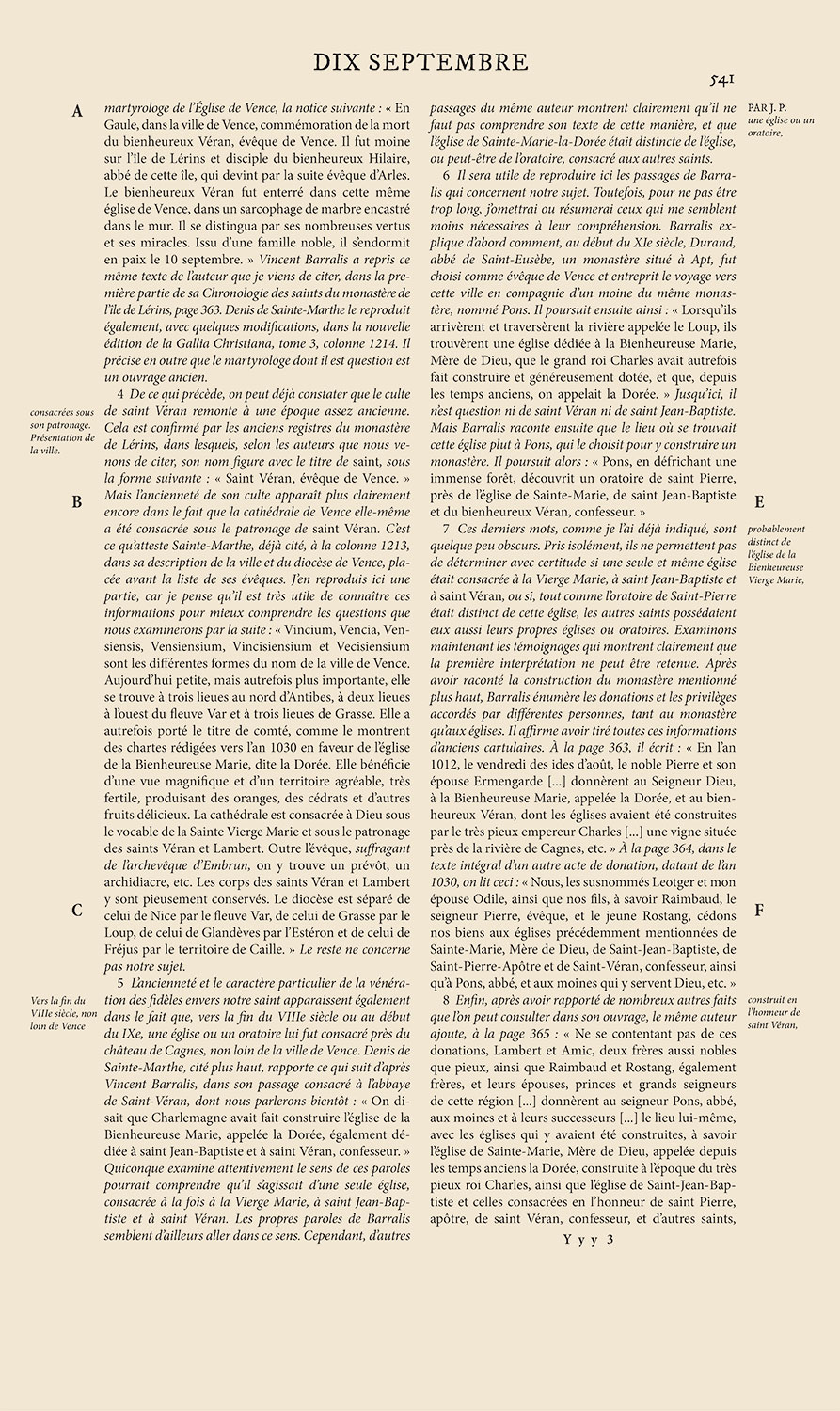
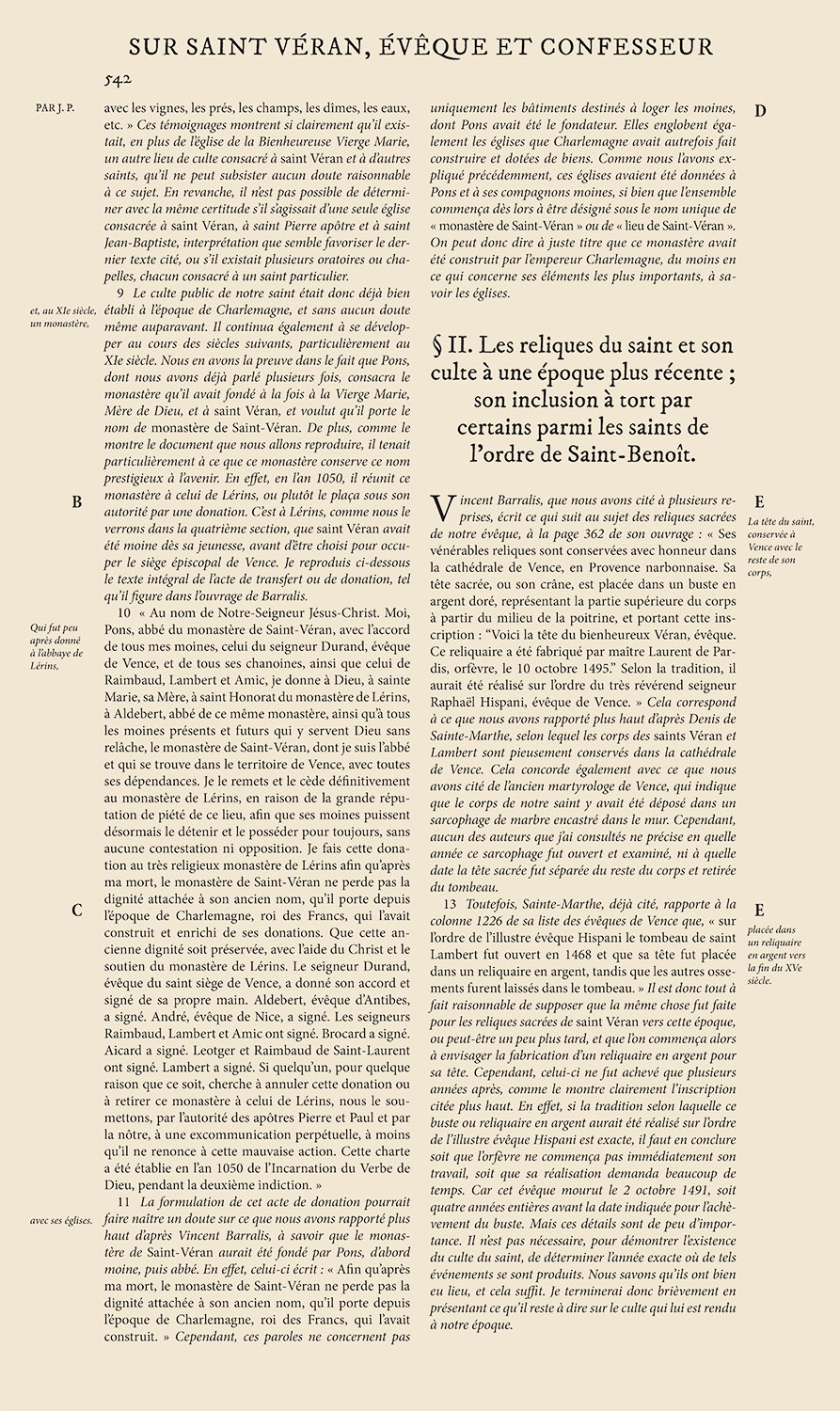
Explore a fascinating 18th-century investigation into the life of Saint Véran of Vence, as the Bollandist scholar J.P. examines conflicting historical accounts, ancient manuscripts, and centuries of confusion surrounding the saint’s identity. Download links below.
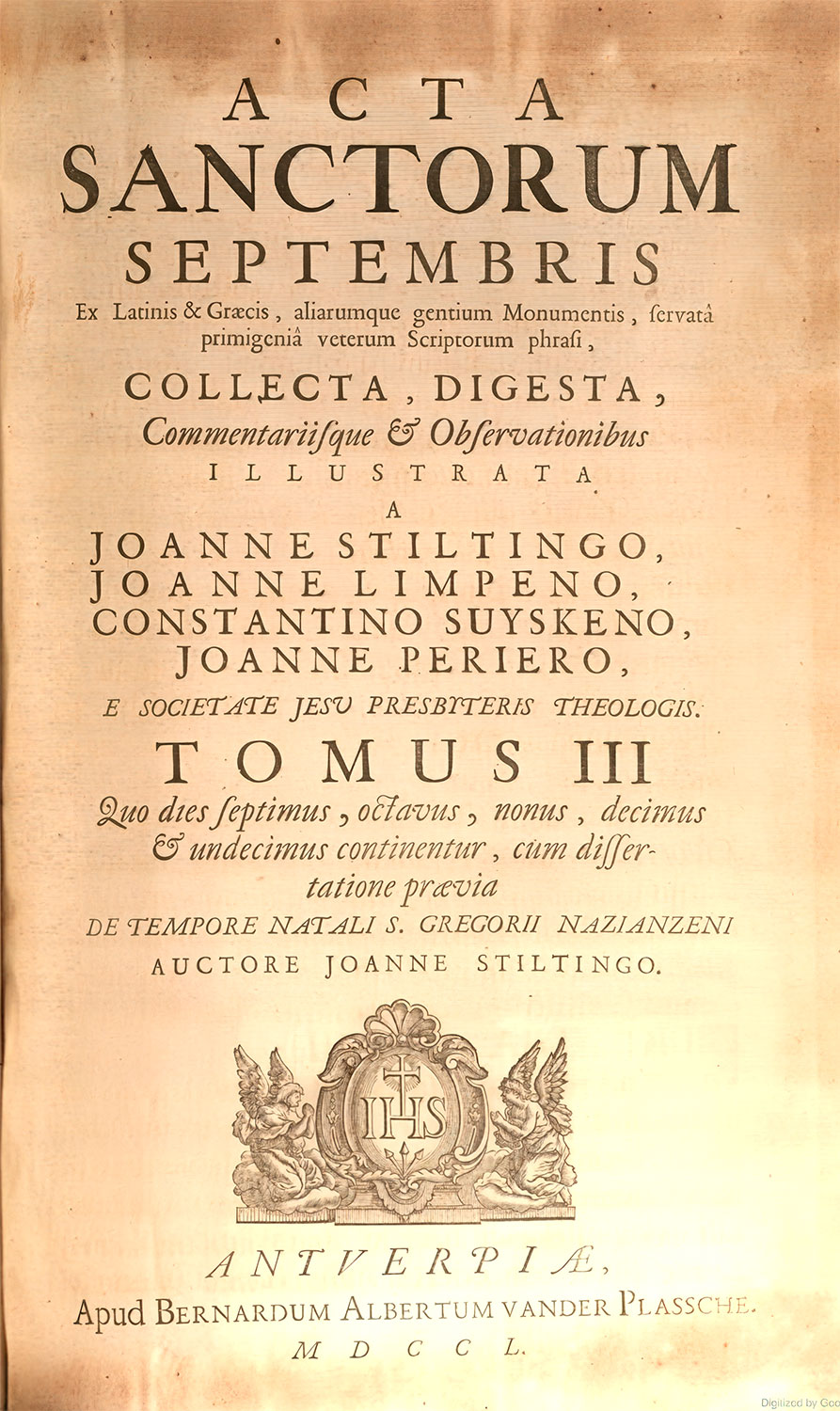
Saint Véran has been venerated as one of Vence’s patron saints for centuries, yet details of his life remain surprisingly uncertain. Traditionally identified as a fifth-century bishop, the son of Saint Eucherius of Lyon and the brother of Saint Salonius of Geneva, he is also believed to have studied at the monastery of Lérins before becoming Bishop of Vence. However, the possible existence of another Saint Véran associated with Lyon, whose life shares many of the same details, has long complicated efforts to establish his true identity. Over the centuries, scholars have examined ancient writings, papal letters, ecclesiastical records, and later religious traditions in an attempt to distinguish historical fact from legend. One of the most thorough examinations of this enduring mystery appeared in 1750 in the Acta Sanctorum, where the Bollandist scholar Jean Périer (Joannes Perierus) carefully evaluated the conflicting evidence and competing interpretations surrounding the life of Saint Véran.
You can read a more in-depth account of the Acta Sanctorum article here: The Acta Sanctorum and the Mystery of Saint-Véran of Vence.
The Acta Sanctorum, a monumental collection devoted to the lives and histories of Christian saints, originated with the Belgian Jesuit Heribert Rosweyde in the early seventeenth century and was subsequently developed by Jean Bolland, whose name became associated with the scholars known as the Bollandists. First published in Antwerp in 1643, the undertaking eventually expanded to 67 volumes comprising more than 60,000 pages. Organized according to the saints’ feast days, the collection combines historical accounts with detailed scholarly investigations based on ancient manuscripts, ecclesiastical records, and other surviving evidence.
The Bollandists carefully examined conflicting traditions, questioned doubtful claims, and sought to establish the historical foundations of stories that had been repeated for centuries. Their work preserved an enormous wealth of early Christian and medieval material, and their scholarly tradition continues today through the Société des Bollandistes in Brussels.
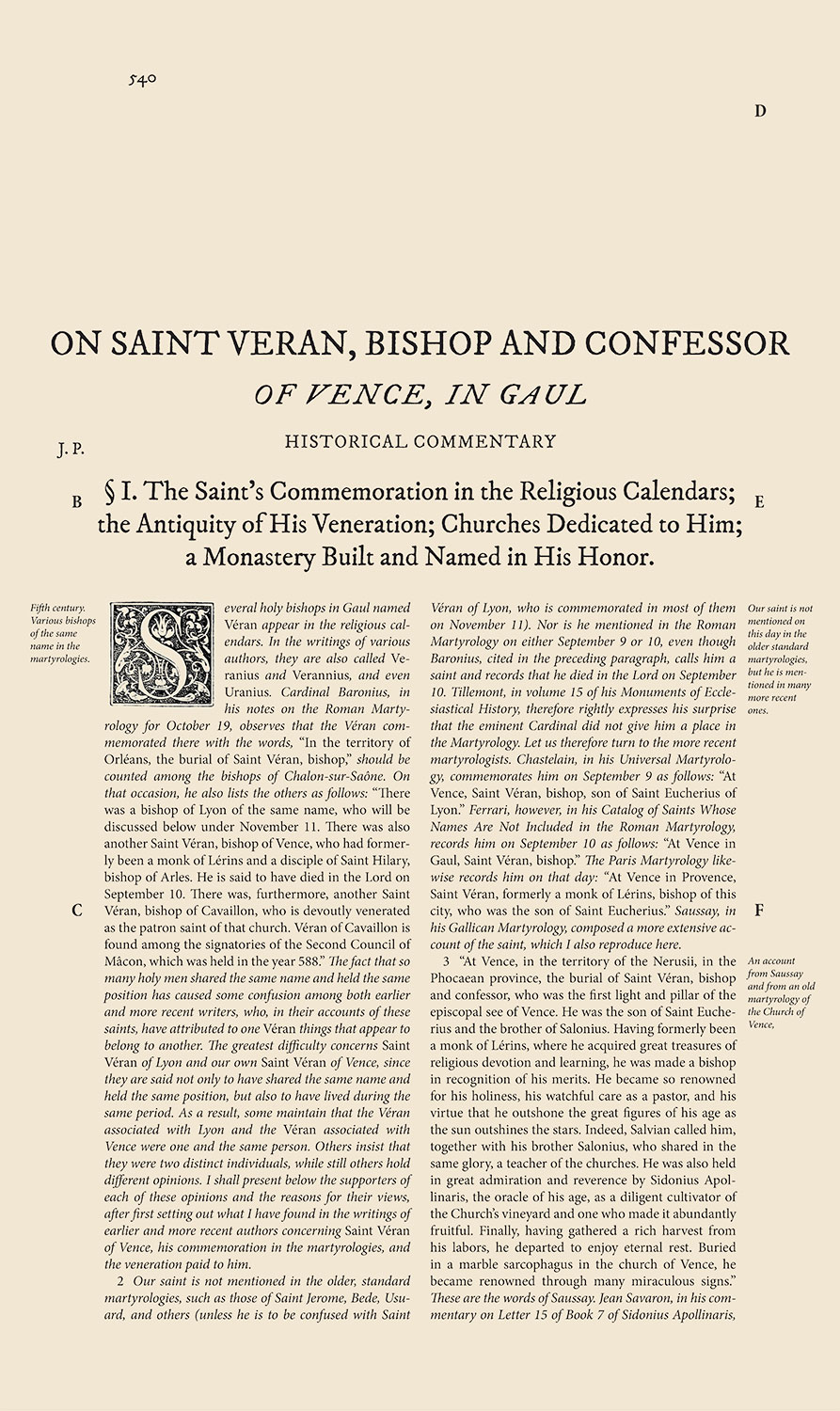
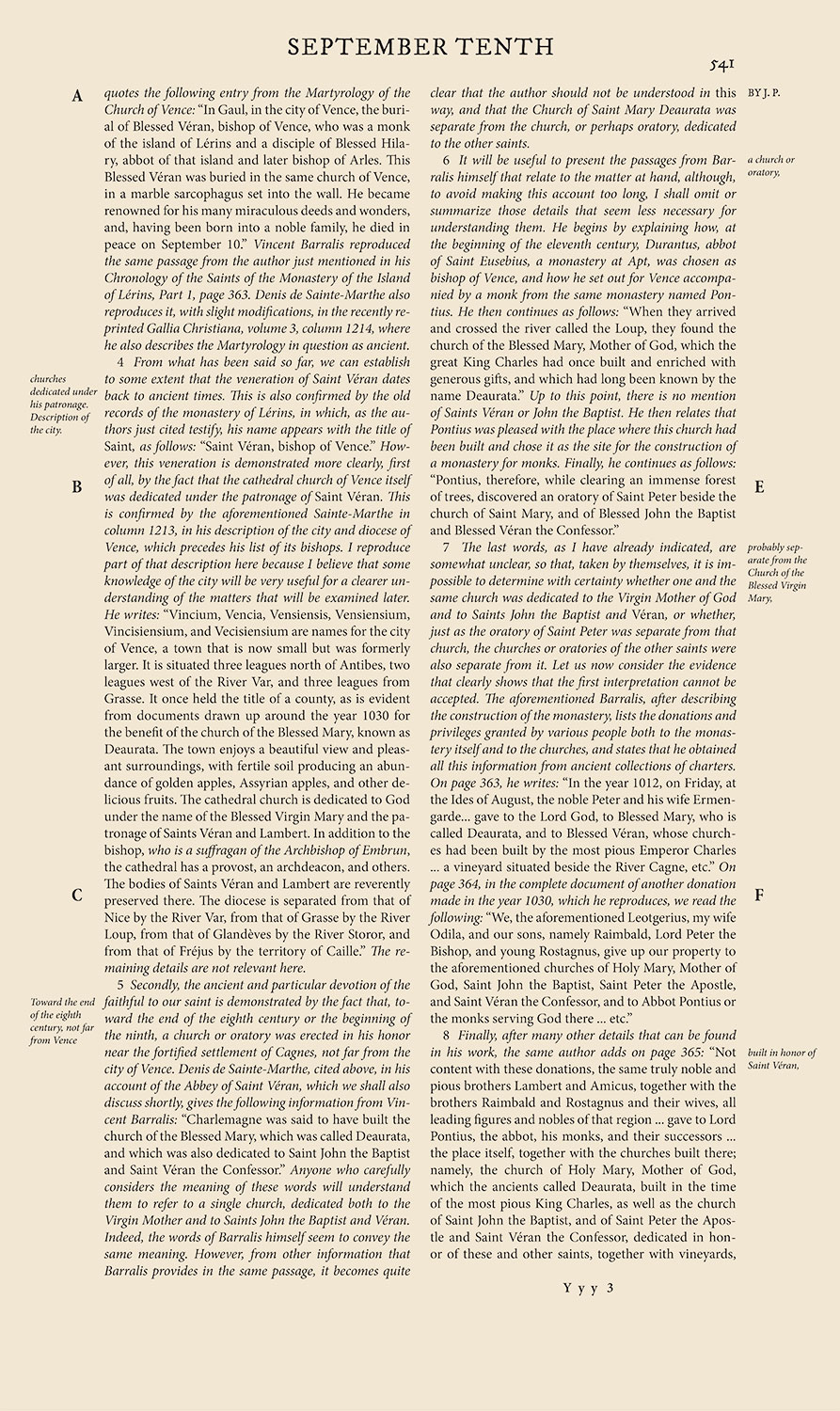
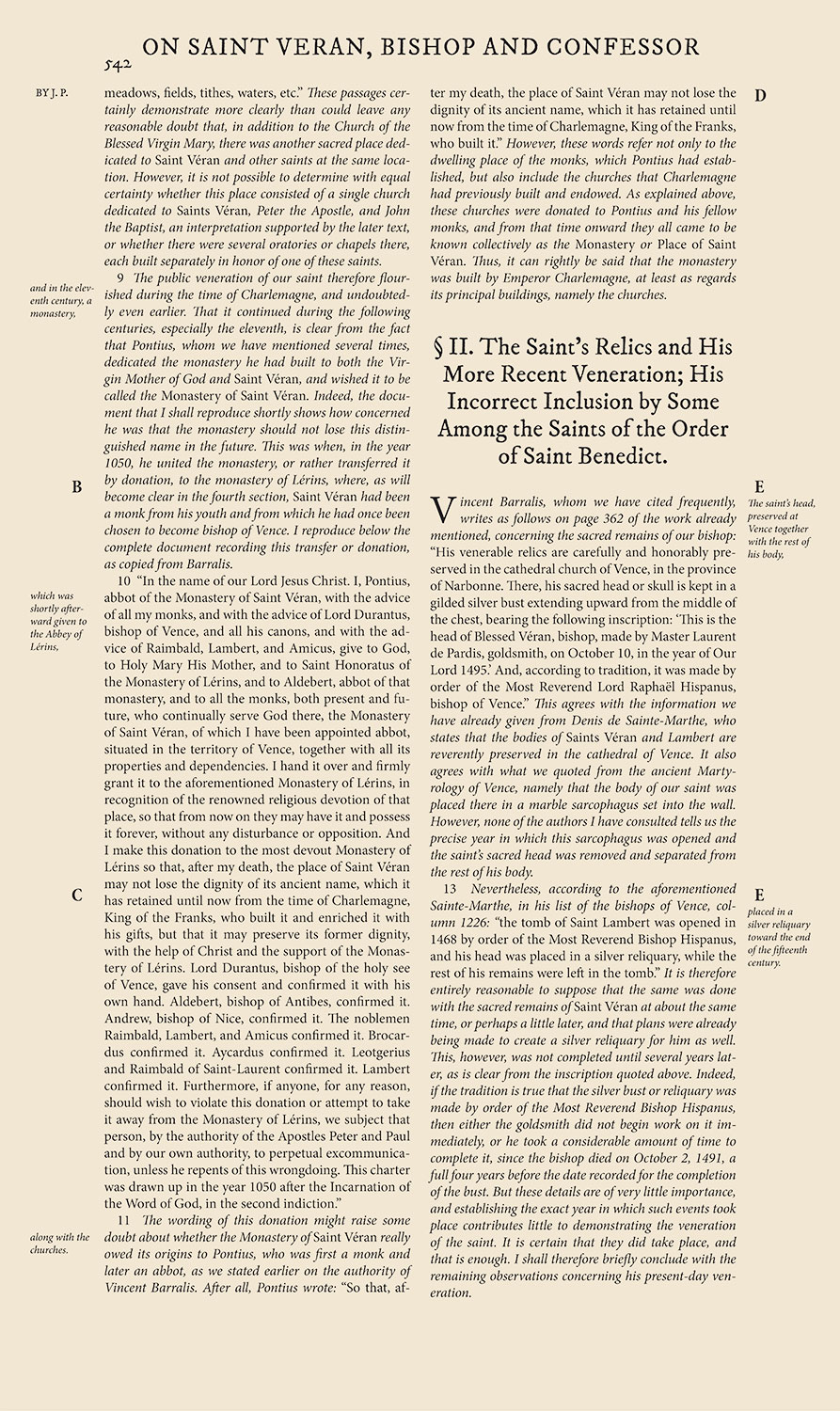
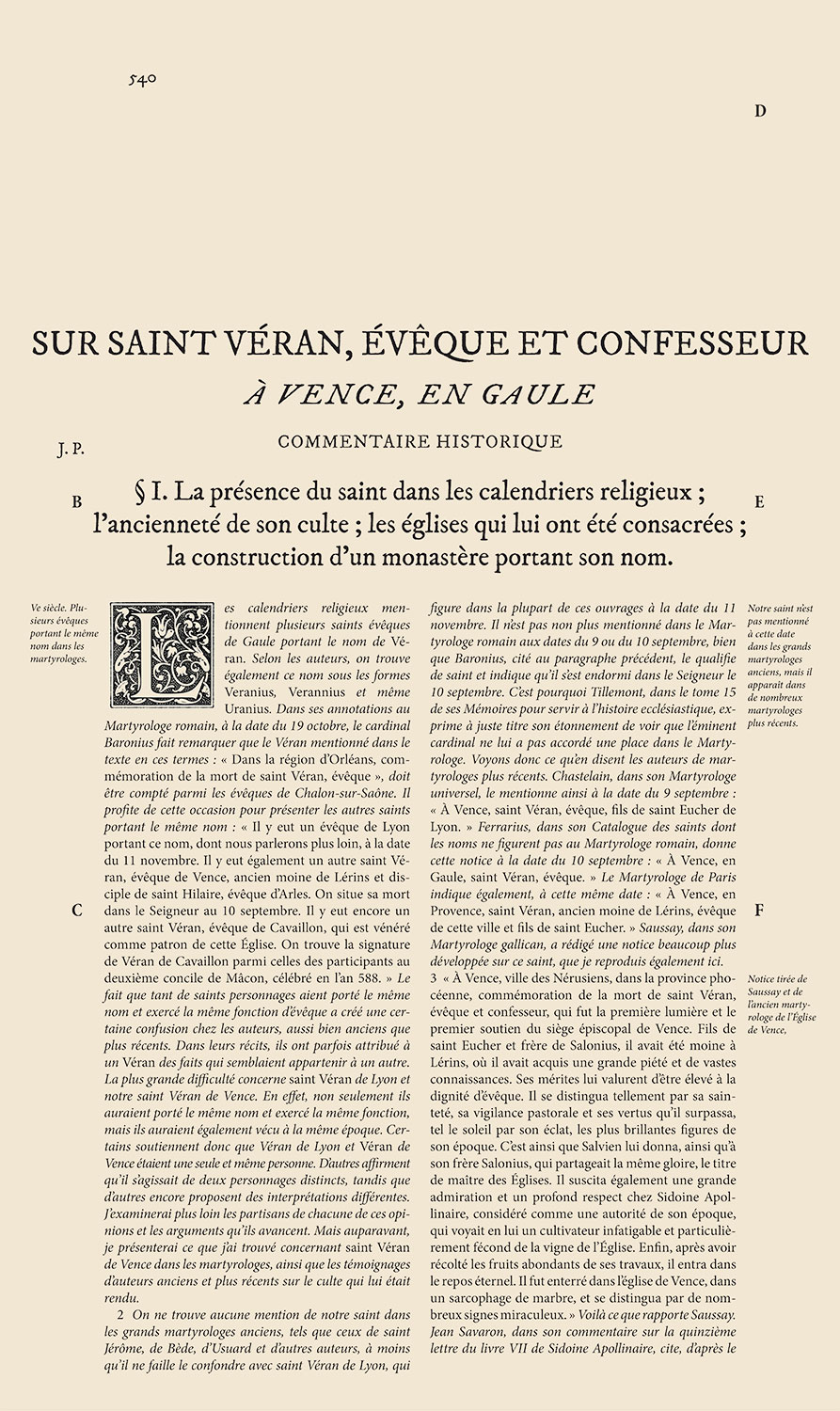
In September 1750, the third September volume of the Acta Sanctorum appeared, covering saints commemorated from September 7 through 11. Included under September 10, the traditional anniversary of Saint Véran’s death, was a substantial study titled De S. Verano Episc. Confessore Venciæ in Gallia (On Saint Véran, Bishop and Confessor, at Vence in Gaul). Périer, identified by the initials J. P., presented his investigation as a Commentarius Historicus (Historical Commentary), concentrating on the available historical evidence rather than traditional accounts of miracles and religious devotion. Perier acknowledged that he had found no ancient biography of Véran, whether printed or handwritten, echoing an earlier observation by Vincent Barralis that such a work might have disappeared or perhaps never existed.
Working instead from surviving historical fragments, Perier organized his investigation into six sections examining Véran’s commemoration in the martyrologies, the origins of his veneration at Vence, churches and monasteries associated with his name, his relics, family connections, and possible education at Lérins. Particular attention is given to correspondence involving Popes Leo the Great and Hilarius, which provides important contemporary testimony concerning a fifth-century bishop named Véran. The central issue, however, is whether Véran of Vence and Véran of Lyon were separate individuals or a single historical figure whose identity later accounts confused. To address this question, Perier scrutinizes the arguments of earlier authorities, including Cardinal Baronius, Jean Savaron, and Vincent Barralis, and often disputes their interpretations. He ultimately concludes that the evidence points to one fifth-century Véran, the son of Saint Eucherius, brother of Saint Salonius, and Bishop of Vence.
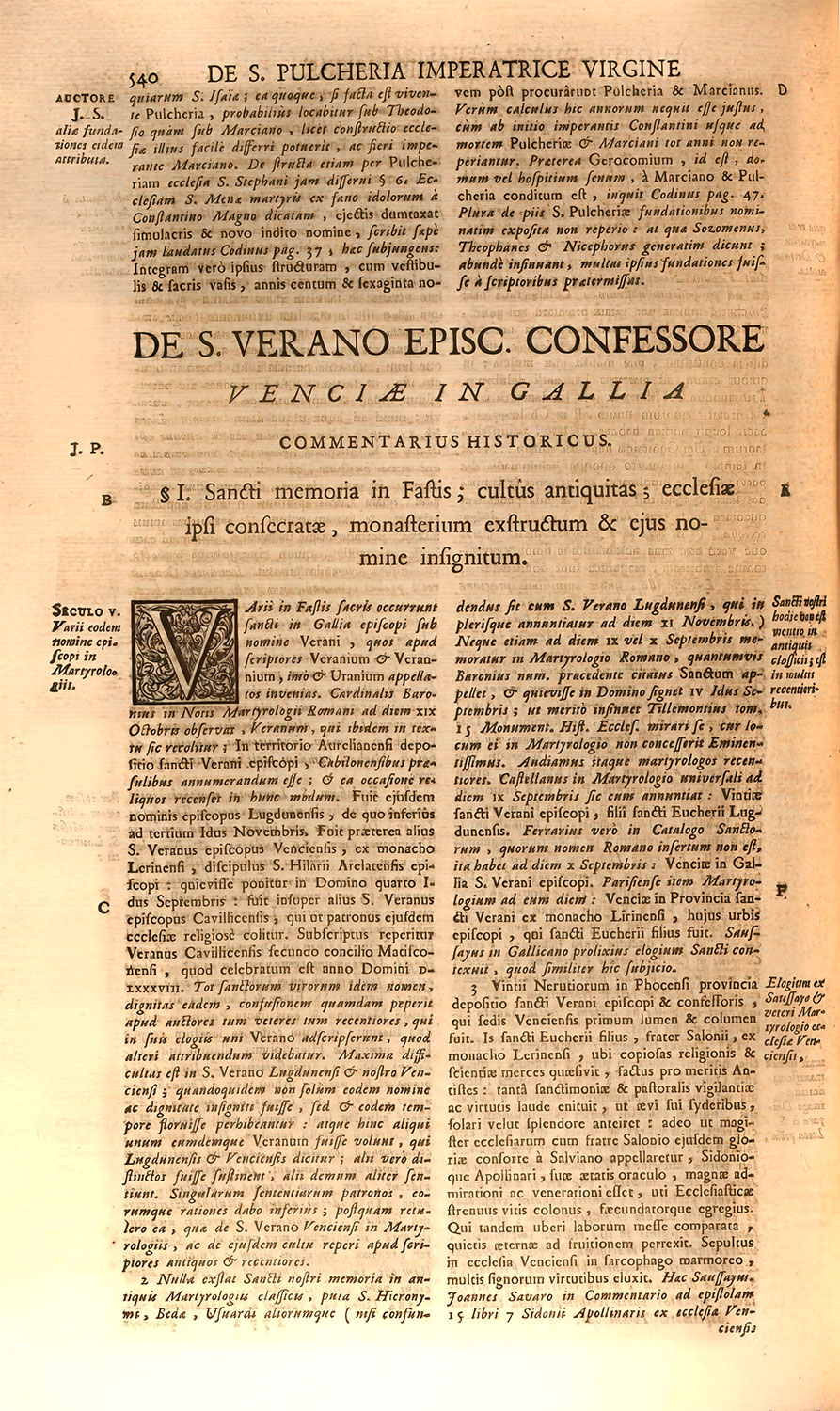
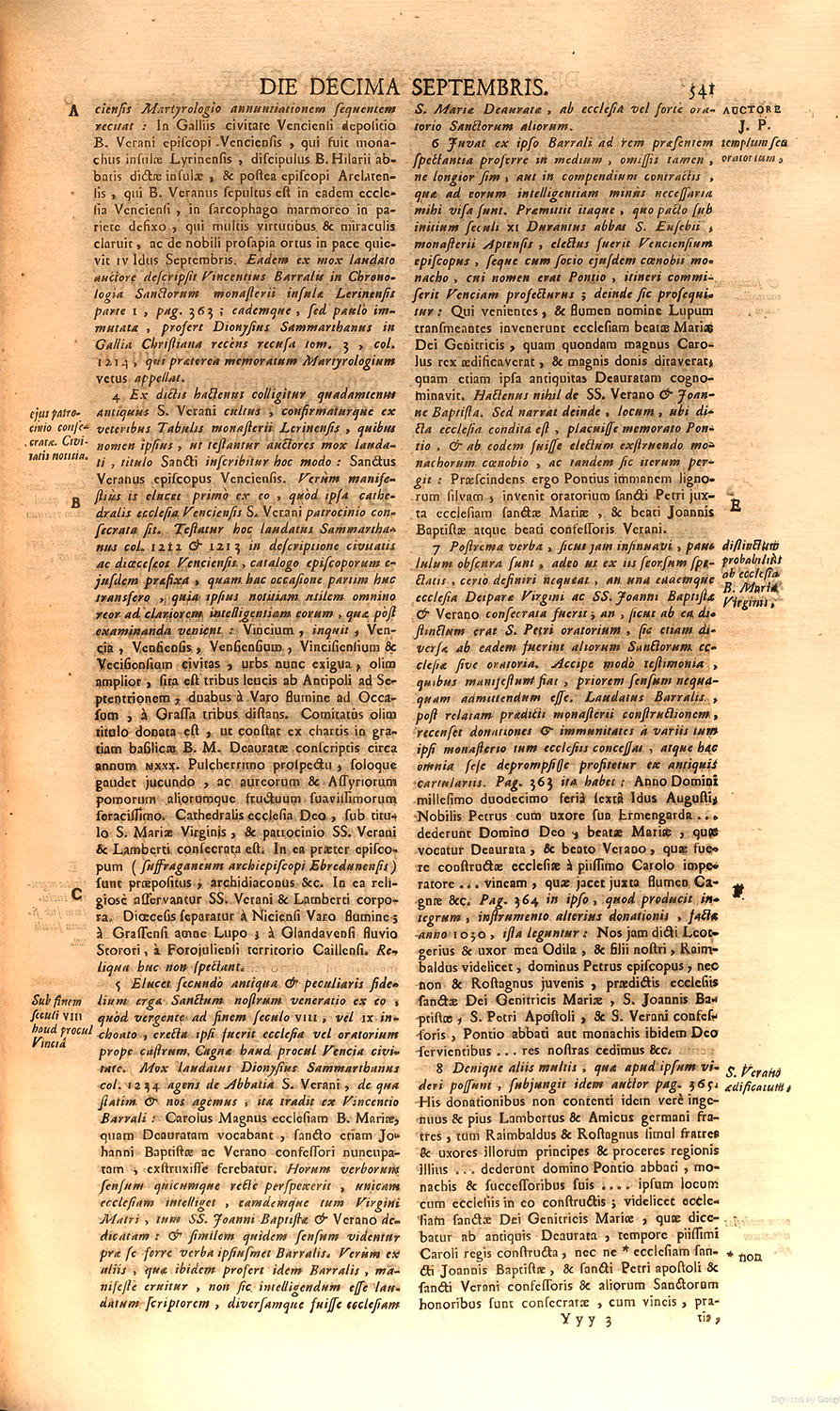
Périer divided his original article into six separate sections:
- The Saint’s Commemoration in the Religious Calendars; the Antiquity of His Veneration; Churches Dedicated to Him; a Monastery Built and Named in His Honor.
- The Saint’s Relics and His More Recent Veneration; His Incorrect Inclusion by Some Among the Saints of the Order of Saint Benedict.
- The Saint’s Distinguished Parents, Homeland, and the Period in Which He Lived.
- The Saint’s Education in the Monastery of Lérins; Three Opinions Concerning His Episcopal See Are Presented, the Third of Which Is Examined and Refuted.
- The Arguments Supporting the Second Opinion Are Examined, and the Reasons Why the First Opinion Is Considered More Probable Are Presented.
- Correspondence with Pope Leo. Disputes Arising Among Certain Bishops of Gaul Are Entrusted to Him by Hilary, Leo’s Successor. The Year of His Death Is Uncertain.
Below are links to download three versions of this article (as well as a zip file with all three versions):
1. The original Latin.
2. A modern French translation.
3. A modern English translation.
I found a transcription of the Latin article on the Ökumenisches Heiligenlexikon website. I used ChatGPT’s OCR (optical character recognition) capabilities to translate the text from Latin into English and French, then carefully reviewed it and made any necessary corrections.
Download a high-quality PDF reproduction of the original Latin (33mb)
Download a high-quality PDF translation in French (7mb)
Download a high-quality PDF translation in English (7mb)
Download a zip file of all three versions (47mb)
[click on any image to see sample pages of the different translations]